
If you’re researching AI for compliance in banking, the following might sound familiar:
- Your compliance teams spend a lot of time doing repetitive, manual KYC/AML checks across high volumes of cases, slowing verification and driving up costs.
- Your teams spend time reconstructing “what happened” for each customer from multiple sources, which slows reviews and can lead to inconsistent, hard-to-audit decisions.
- High false positives frustrate customers and create rework for your teams, while also increasing the risk of missing genuine threats.
- Your teams are resistant to adopting AI tools and systems, which risks creating friction and inconsistencies that can quickly become compliance risks.
As a full-service AI consultancy specializing in financial services, Neurons Lab can help you understand where to start with artificial intelligence in compliance management and which use cases make sense for your financial institution.
In this article, we cover:
- What’s Possible with AI: Key Compliance Use Cases
- How to Get Started with AI for Compliance
- What Banks Need to Take into Consideration with AI-Driven Compliance
- How Neurons Lab Can Help Banks Implement AI for Compliance
- How A European Bank Scaled Compliance and Saved 80% with Neurons Lab’s AI Agent Solution Accelerator
- FAQs
Want to get started with AI solutions that make your bank’s compliance processes faster, more efficient, and reliable at scale? Neurons Lab can help. Book a call with us today.
What’s Possible with AI: Key Compliance Use Cases
Banks face growing regulatory complexity, slow manual processes, and competitive pressure to automate compliance workflows. In EMEA, financial institutions spend $85 billion per year on compliance, with costs continuing to rise, according to LexisNexis1. AI can reduce this burden by making a measurable impact across use cases like:
1. Document Extraction and Processing
As compliance workflows are document-heavy, officers spend hours manually extracting and inputting information from know your customer (KYC) files, onboarding packs, and transaction records. They move data across PDFs, emails, and core systems, increasing both workload and operational risk.
Meanwhile, traditional optical character recognition (OCR) tools struggle with poor scan quality, complex layouts, handwritten fields, stamps, and multi-page documents. This leads to inconsistent extraction, frequent human checks, and high error rates that require further manual review.
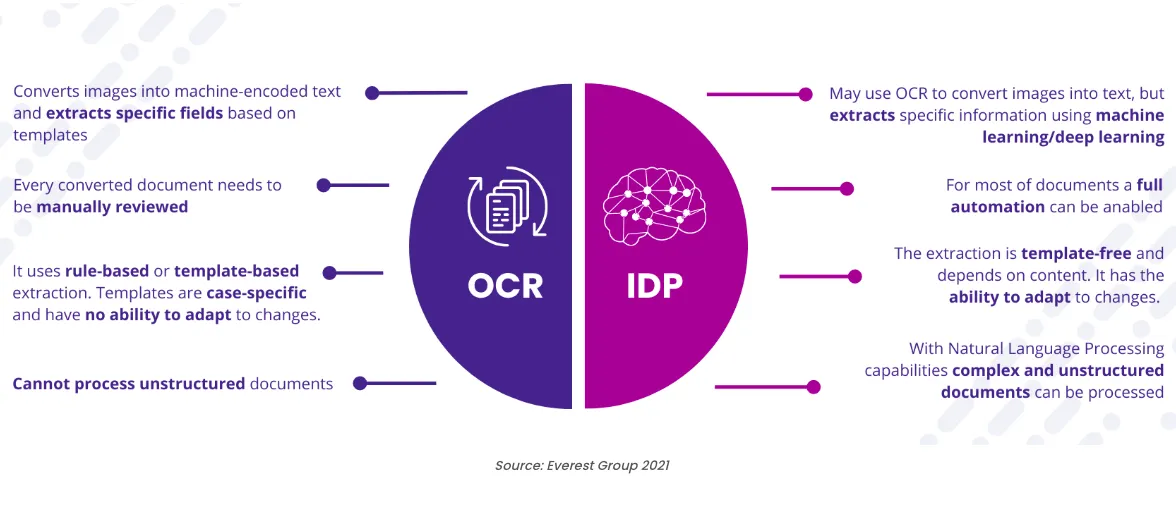
Through Intelligent Document Processing (IDP), machine learning can classify documents automatically, understand structure and context, and extract specific compliance-relevant fields, such as dates of birth, company registration numbers, and source of funds declarations.
Artificial intelligence can also reconcile information across multiple documents within a single case. For example, AI can flag mismatches between a passport and a proof of address, or inconsistencies between onboarding forms and corporate registry extracts. It can also spot digital forgeries that human reviewers might miss, adding an extra layer of protection to your onboarding and review processes.
In practice, this means customer ID verification during onboarding can drop from several days to just a few minutes. Meanwhile, anti-money laundering (AML) screening documents that require hours of manual review can be processed instantly with AI. This gives your compliance officers more time to investigate complex cases and focus on escalations that require human expertise.
2. KYC/KYB
Each KYC or know your business (KYB) case your team deals with requires gathering context from multiple sources:
- Customer information, such as application forms, ID documents, and proof of address
- Reference data, such as sanctions lists, PEP databases, and blocklists
- Regulations, including which rules apply based on jurisdiction, customer type, and transaction size
- Internal policies, such as the bank’s own risk tolerance and procedures
- Historical patterns and what’s normal for this type of customer
- Any ongoing investigations or recent regulatory changes
This isn’t a simple yes or no checklist. It requires processing lots of documents, checking multiple databases, and making nuanced judgments for risk assessment.
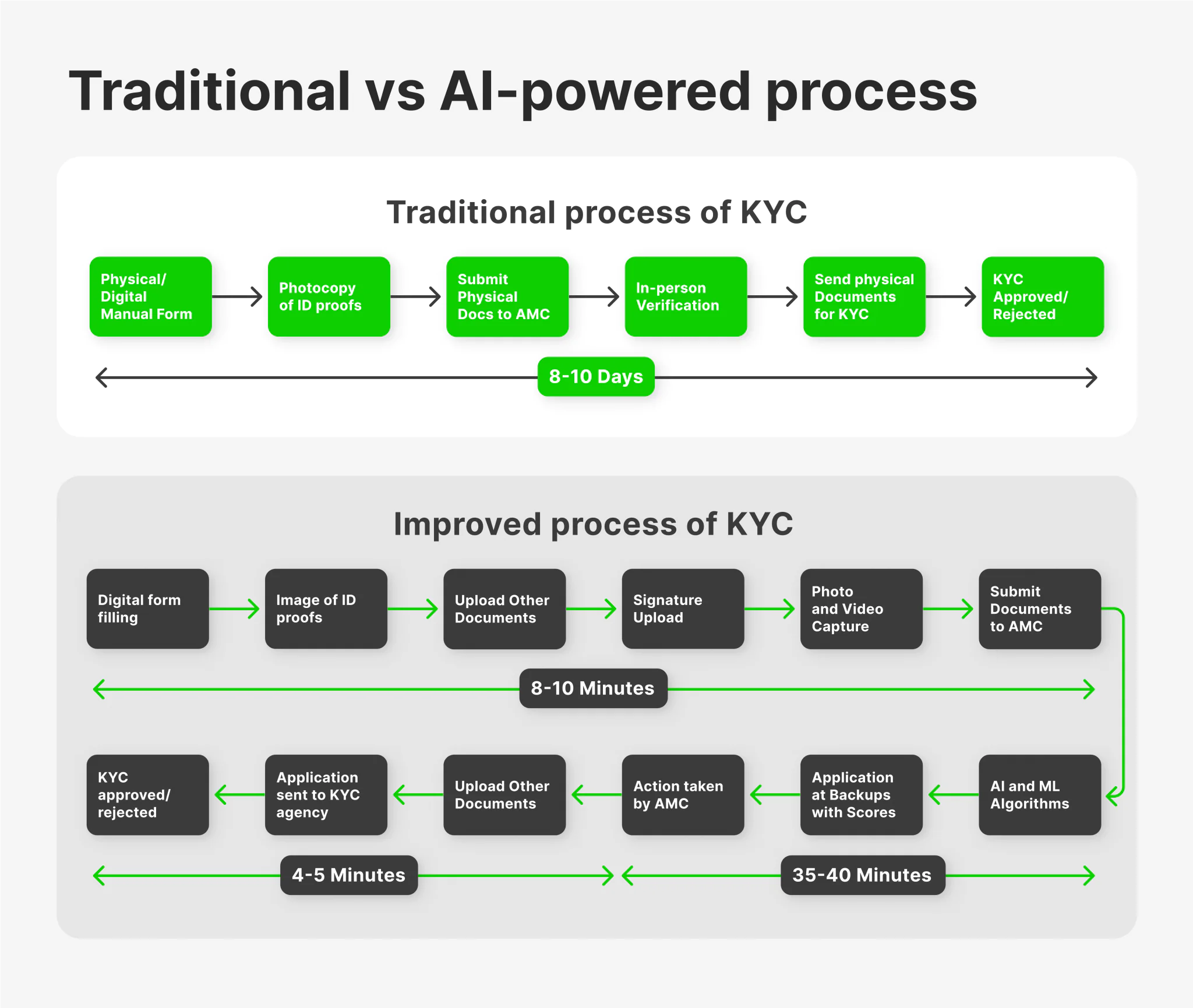
As a result, complex cases like onboarding a corporate client with multiple beneficial owners across different jurisdictions can take your compliance teams days or weeks to process. And with high volumes handled manually, errors along the way are common. When this happens, wait times stretch further, frustrating customers and increasing your risk exposure.
With AI, you can streamline identity verification, document validation, and other compliance workflows while flagging exceptions for human review. AI can do this across thousands of pages, checking multiple databases and cross-checking regulations simultaneously. This reduces KYC processing time from days to hours, freeing your compliance officers to focus on complex cases and judgment calls rather than manual data gathering.
3. Anti-Money Laundering (AML)
In AML compliance and financial crime prevention, regulatory requirements shift, jurisdictions apply different rules, and internal policies evolve. Keeping up with all of this manually is challenging for your compliance teams that are already stretched thin.
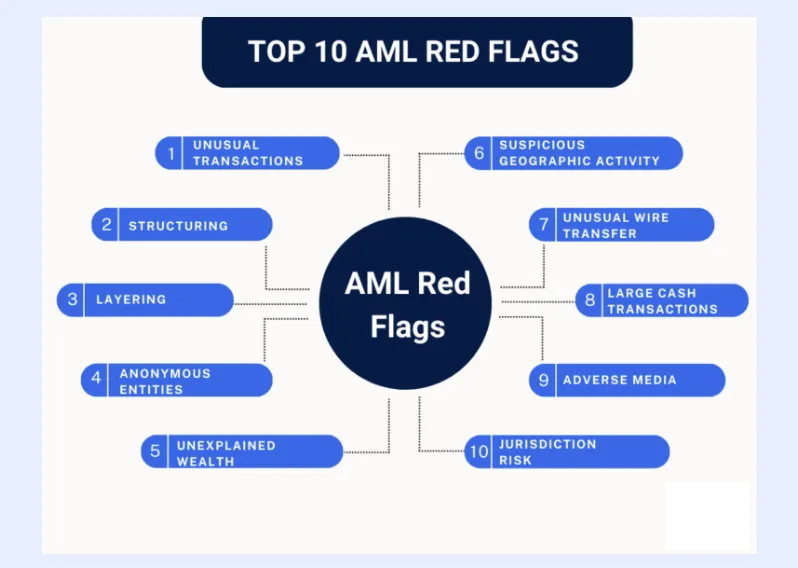
Meanwhile, millions of transactions must be monitored daily, with each flagged transaction requiring human review. The sheer volumes can overwhelm your compliance team and lead to actual risks slipping by undetected.
AI can learn what normal looks like for each customer and identify subtle connections humans might miss, even at scale. For example, it continuously monitors transactions for suspicious patterns across millions of cases simultaneously for fraud detection. It also applies rules consistently across every transaction, reducing errors and improving outcomes.
4. Client 360
Client 360 refers to the complete picture of a customer’s relationship with your bank. Every customer activity, whether opening or closing an account, processing a transaction, or even a simple communication, triggers the need for this full context.
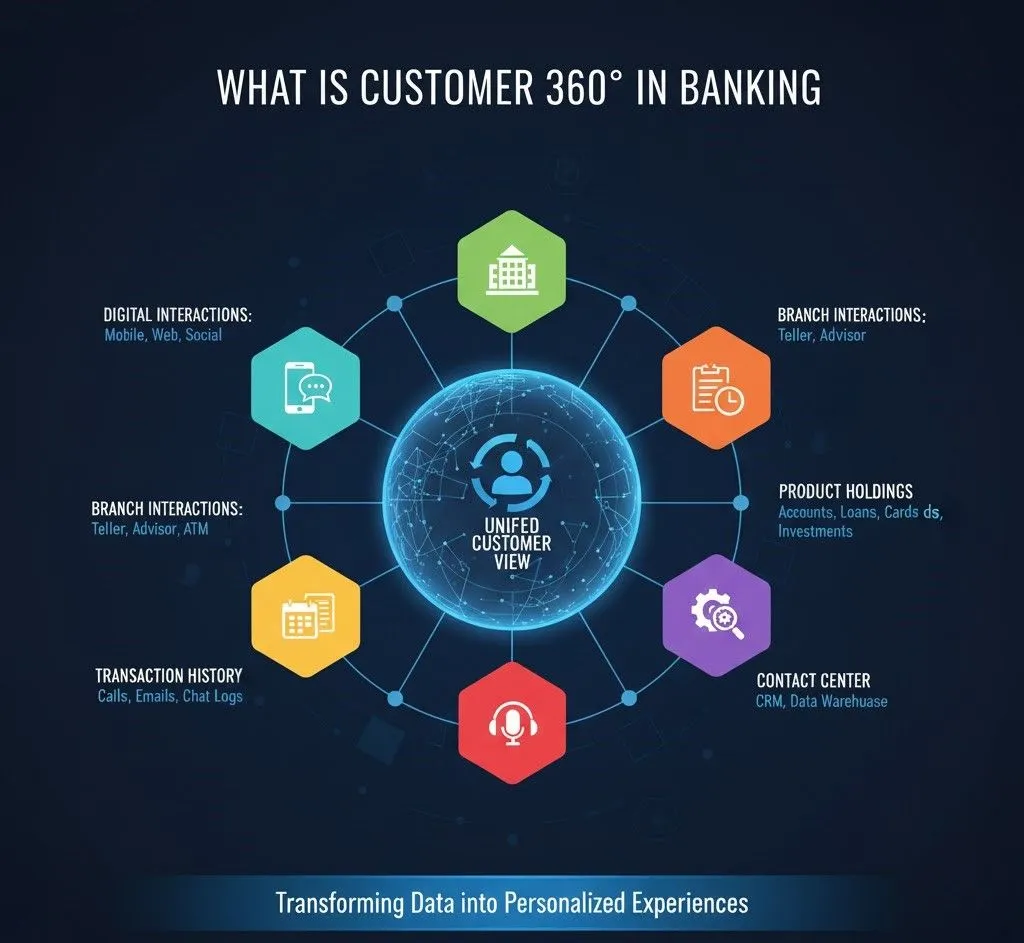
For your teams, the problem is pulling together all this scattered customer data fast enough to meet compliance requirements, maintain auditability, and avoid inconsistent decision making.
AI-powered systems support Client 360 by assembling the relevant customer context for a specific compliance task, then surfacing the most important extracts for that case. This can include onboarding details, prior communications, supporting documents, and screening context, such as watchlist or blocklist matching signals, with clear traceability for audits.
Instead of chasing context across systems, compliance teams can use the AI-driven consolidated view to triage alerts faster, reduce false positives, and make more consistent decisions. Humans still sign off, but they do it with better evidence and a clearer decision trail.
5. Decision Audit Trails
When decisions aren’t captured in a standard, reviewable format, you introduce AI model risk and governance risk, because you can’t prove what inputs were used, what checks ran, or who approved the outcome. AI solves this by creating transparent records of every compliance decision, so your teams are always audit-ready.
For example, if a regulator questions a KYC approval decision made six months ago, your team can pull the complete decision trail instantly rather than spending days piecing it together manually.
AI also makes reporting preparation faster and more reliable by feeding information directly into your own compliance reporting software. This ensures consistent outputs meet regulatory standards.
6. Risk Monitoring
Customer risk profiles change constantly. When your compliance officers have to monitor this manually, it’s slow and inconsistent, increasing the chance of issues slipping by undetected. And this can have serious regulatory and operational implications, such as hefty fines and reputational damage.
For example, without real-time compliance monitoring, teams might not notice that a corporate client has slowly shifted its business to a sanctioned country. A periodic review might catch this months later, after the bank has already processed transactions it shouldn’t have. However, with AI, your systems can immediately flag such transactions, alerting your teams before any payments are sent.
It can also continuously monitor risk signals across your entire customer base in real time. So, rather than waiting for periodic reviews, you can predict the potential impact of transactions before they’re executed.
How to Get Started with AI for Compliance
Now that the possibilities of AI in compliance are clear, you’ll need the right foundations in place to get started. Here’s how to build that base:
1. Identify The Right Use Cases To Ensure High ROI And Measurable Business Outcomes
A single compliance officer saving two hours on a rare edge case won’t offset the cost of AI implementation. And small-scale experiments, like piloting AI with a compliance executive or automating a single infrequent task, can’t generate meaningful business outcomes.
High ROI and measurable business results come from delegating AI to take over high-volume, repeatable workflows across entire departments. This way, initial investment and development costs can be spread across far more output.
As we covered earlier, KYC, AML, Client 360, and document extraction are strong starting points as they require repeated reviews across documents, data sources, and risk signals. Beyond the use cases already covered, other high-value compliance workflows worth considering include:
- Policy document analysis: AI can identify gaps between your current policies and new requirements, flagging areas that need updating before they become compliance risks.
- Suspicious Activity Report (SAR) preparation: AI can draft SARs by pulling together relevant transaction data, customer history, and risk signals automatically.
- Sanctions screening: AI continuously screens your entire customer base against updated sanctions lists, PEP databases, and watchlists.
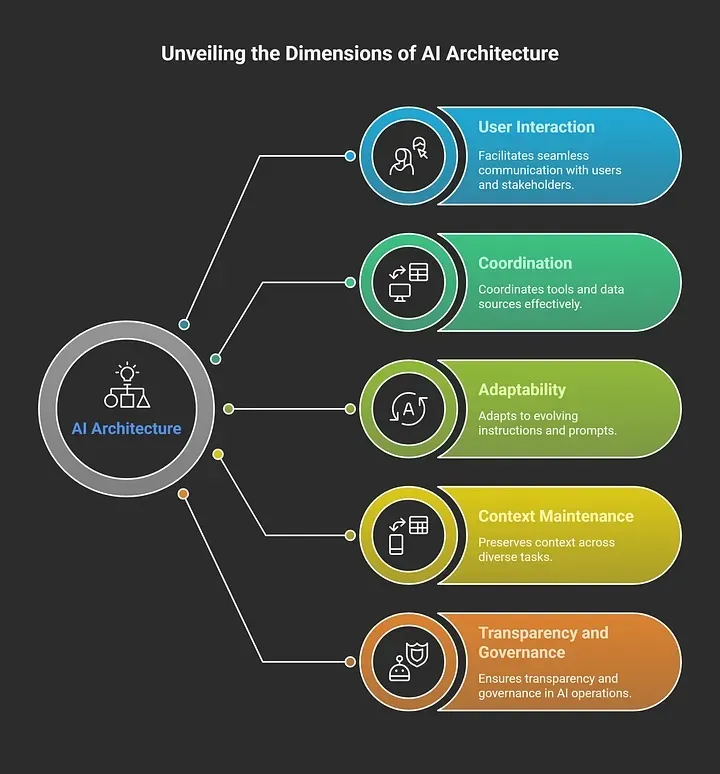
2. Prioritize a Multi-Layered Architecture that Makes AI Secure, Scalable, and Compliant
A multi-layered architecture helps you move beyond slow, manual processes to AI-augmented workflows that scale. This consists of:
- A conversation layer or frontend: This is what your compliance teams will access to interact with the AI’s outputs in a conversational way.
- A control layer or backend: Backed by infrastructure like AWS AgentCore or GCP ADK, this layer provides the technical foundation your AI needs to operate safely and effectively. It includes:
- Memory to keep track of customer history and previous interactions.
- Policies and guardrails, including content filters and sensitive information filters, to ensure AI stays within legal and company rules while preventing data leaks.
- Observability through monitoring tools that track what the AI is doing and why.
- Actionability through protocols like MCP (Model Context Protocol), so AI can execute tasks like checking a blocklist or opening an account.
- Audit trails that capture every decision taken by AI for review and regulatory purposes.
- A skills and knowledge layer: This layer captures how your teams handle compliance workflows like KYC verifications or credit checks. In turn, this ensures AI produces accurate, relevant results that reflect how your best officers work.
3. Ensure The Right Data Infrastructure for Reliable and Flexible AI
For reliable, usable compliance outputs your teams can use, your AI systems need clean data pipelines and access to core context, including:
- Core banking platforms like Avaloq
- Transaction records
- Customer profiles
- Sanctions databases
- Case management systems
- Regulatory reference data
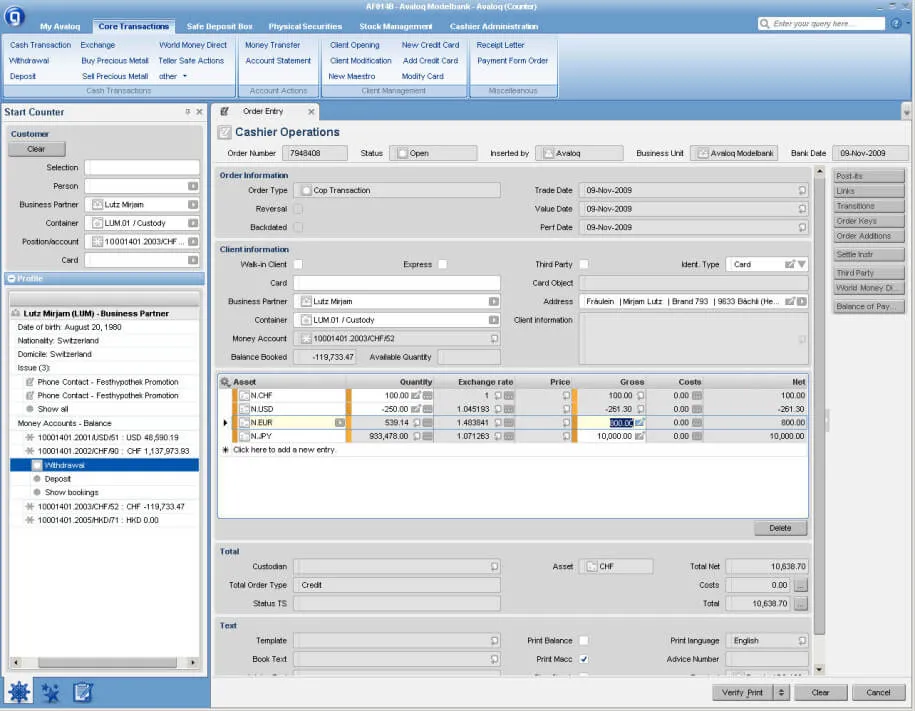
You’ll also need clear standards and protocols to enable AI agents to interact with your systems safely. Open APIs and Model Context Protocol (MCP) enable AI agents to trigger blocklist checks, query legacy systems, and perform other compliance tasks within clearly defined access boundaries
Getting this right means your AI systems will behave reliably and produce consistent outputs, all within the guardrails you set.

4. Establish an Evaluation Framework to Monitor and Continuously Improve AI Performance
An evaluation framework provides a systematic way to track, benchmark, and continuously improve your AI solution so it stays aligned with how your compliance teams work.
You’ll need:
- Datasets curated by your internal compliance subject matter experts (SMEs): These are a library of real and ideal cases solved and defined by your SMEs that become the standard or benchmark for AI performance. That way, when AI outputs don’t meet the standard, you’ll know and can make adjustments.
- LLM-based evaluation: Manually reviewing every AI output isn’t possible at scale, so set up a secondary AI tool to score every output your AI solution produces based on your specific compliance rubrics. This allows your teams to detect quality issues early and monitor performance trends.
- SME validation: If outputs fall below quality thresholds, they should go to a subject matter expert who reviews them, corrects them, and feeds that knowledge back into your datasets.
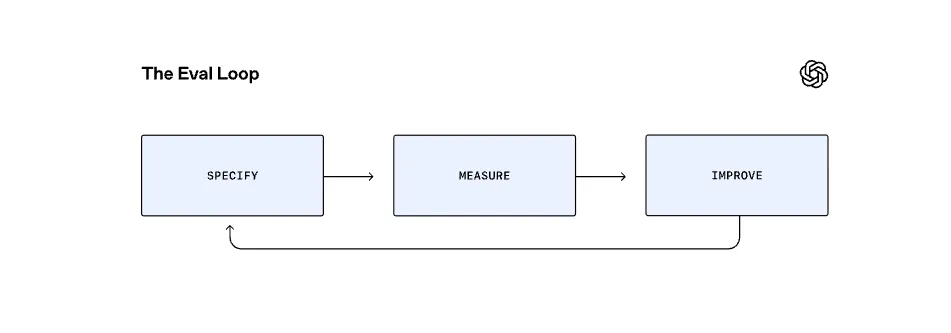
With this evaluation framework in place, you can turn unpredictable, non-binary AI behavior and agent’s responses into measurable, auditable performance.
5. Design Human-in-the-Loop Checks Into Every Workflow
Human-in-the-loop (HITL) design means your compliance teams are involved at every stage of the AI implementation process. Their expertise guides how AI behaves, their feedback corrects errors, and their oversight helps validate outputs.
As a result, your AI systems perform based on your own bank’s standards, processes, and in-house knowledge.
This approach also preserves your institutional knowledge. The judgment and expertise of your best compliance officers get embedded into AI systems, so it doesn’t leave when they do. In turn, both new employees and existing teams can benefit from the standards top performers have set.
What Banks Need to Take into Consideration with AI-Driven Compliance
As a bank navigating AI for compliance, here’s what to know before implementation:
- Reliability matters more than speed: AI errors in the BFSI industry can lead to regulatory action and hefty fines. So it’s important to prioritize systems that are dependable, auditable, and production-ready to ensure peace of mind over fast proofs of concept or disposable software.
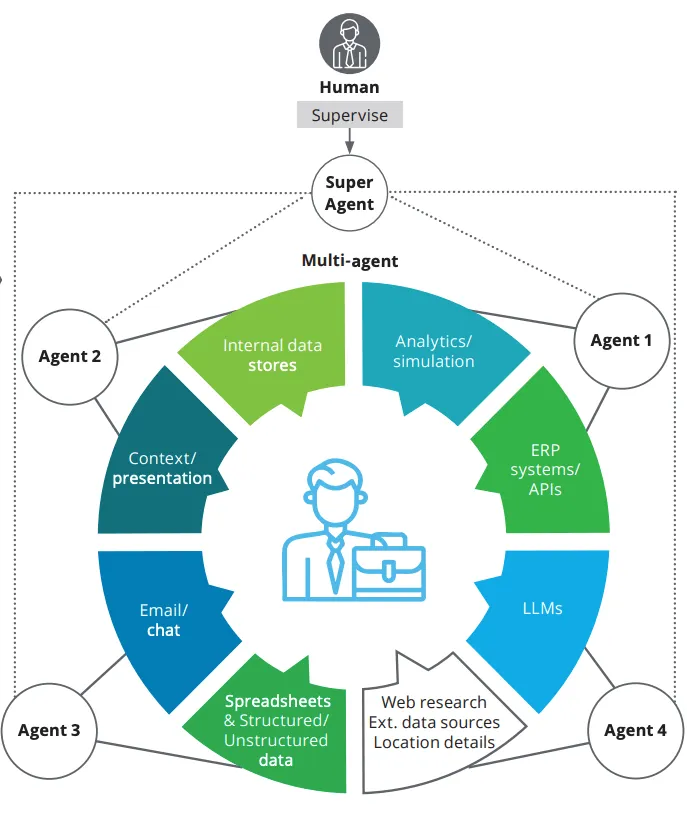
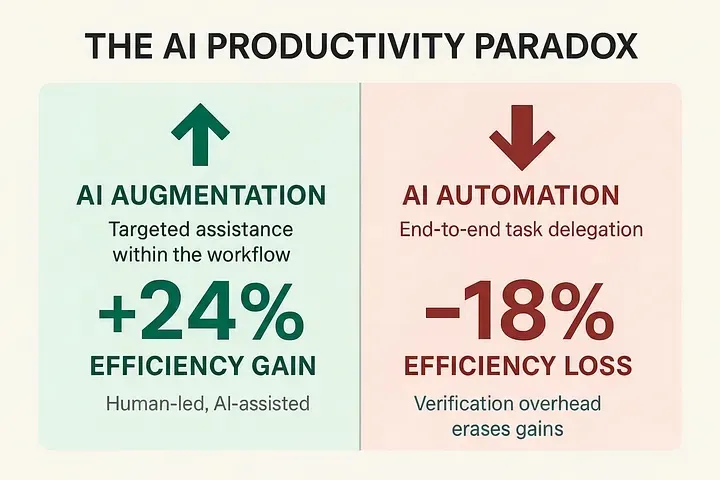
- Start with AI-assisted work: Full automation or delegation is not yet possible for many compliance use cases due to regulation. So start by combining human judgment with AI to set the context and rules. Then let AI act like a junior assistant that handles the processing and reasoning at scale, while your team reviews and approves the output for the best outcome.
- Avoid ecosystem lock-in: Standards like MCP and Open APIs mean your architecture is less dependent on a single platform or vendor. This means you can swap out models, tools, or vendors as your needs change without rebuilding from scratch.
- Make your AI systems auditable and explainable: A clear audit trail backed by documentation shows how your AI systems work and produce outcomes. This transparency helps you stay compliant and defend AI-driven decisions to regulators.
- Involve your compliance teams early to ensure adoption: Resistance around AI can cause your teams to apply workarounds that expose you to compliance gaps, so involve your compliance teams early. As SMEs, they can help build their knowledge into AI systems, which improves accuracy, relevance, and trust from the start.
- Avoid drag-and-drop and no-code platforms: While designed for ease and speed, these generic platforms are often not banking grade. They lack the security, controls, and governance typically needed for complex compliance workflows.
How Neurons Lab Can Help Banks Implement AI for Compliance
With Neurons Lab, you can implement AI for compliance that’s built to address the heavily regulated and complex banking industry.
Neurons Lab is a UK and Singapore-based Agentic AI consulting firm serving financial institutions across North America, Europe, and Asia.
As an AI enablement partner, we design, build, and implement agentic AI solutions tailored for mid-to-large BFSIs operating in highly regulated environments, including banks, insurers, and wealth management firms. Trusted by 100+ clients, such as HSBC, Visa, and AXA, we co-create agentic systems that run in production and scale across your organization.
By partnering with us for your bank’s AI-driven compliance solution, you can go beyond mere AI-powered automation of tasks. Instead, you delegate context-heavy tasks to AI—much like delegating to a junior employee—while senior human experts retain ultimate accountability and oversight.
We do this by specifying, governing, and auditing AI agents for your enterprise production. Here’s what that means for you:
Speed up and Scale Compliance Reviews with the Right AI Foundation, Context, and Skills
Compliance reviews get stuck because context is fragmented across systems and every case becomes a manual search for evidence. This slows decisions and increases inconsistency, making audit trails harder to defend.
Neurons Lab helps banks speed up and scale compliance reviews with AI agents tailored for regulated workflows. With our AI Agent Solution Accelerator, you can pull the right customer and case context from your systems, apply your review steps, and package the findings into a structured case file for compliance officers. This can reduce review cycles from days to hours.
Through our BFSI specialization, you get access to our domain expertise, regulatory knowledge, and consultancy approach to create the necessary data foundations for your AI systems. This includes context engineering, which structures the scattered information your compliance teams operate on daily into layers that AI can process consistently.
As a result, context is reusable, and queryable, enabling capabilities like a full-client view across onboarding, communications, and risk checks.
We also standardize APIs and MCP connectors, so your AI agents can query and act across legacy systems without unrestricted access.
For reliable AI in banking compliance, we capture how your SMEs actually do the work and convert those steps into reusable, bank-approved AI workflows (“AI skills”). We do this by sitting down with your SMEs, extracting their tacit domain knowledge, and translating this insight into highly governed, production-grade “agent protocols.”
Agents then use these AI skills to follow the same process every time, instead of improvising.
And with our reusable library of pre-built compliance skills like KYC and AML, you don’t have to build from scratch. Each skill is already tested in real deployments and refined from real customer feedback, giving you an efficient way to build and deploy AI in as little as 2-6 weeks.
Ensure Accurate, Auditable AI for Compliance with Expert Review and Governance
Compliance teams need AI that reduces false positives while meeting strict governance standards. Meanwhile, every decision your AI agents make must be transparent, documented, and defensible. Neurons Lab helps you address both challenges through expert guided AI design and built-in governance.
To reduce false positives, you’ll build your compliance experts’ judgment directly into your systems. That way, AI approaches cases the way an experienced compliance officer would: analyzing context and flagging where something looks unusual instead of blindly following preset rules.
We also combine deterministic checks (scoring rules + software tools) with LLM reasoning, so critical steps like matching and screening don’t rely on probabilistic output alone. This improves consistency and reduces avoidable errors in high-stakes compliance work like AML checks.
Meanwhile, to meet regulatory standards, built-in governance keeps AI use compliant by design. Every recommendation comes with a clear record of what information the system looked at, what checks it ran, and what evidence it used. A compliance officer still reviews and signs off, and the system keeps a timestamped trail showing who approved the outcome. This makes it easy to explain decisions during audits and show regulators that AI supported the process without replacing accountability.
You’ll also have our support in setting up judgment layers and evaluation frameworks. We use continuous evaluation, performance standards, and strict rubrics that allow SMEs to objectively score, steer, and improve the AI’s output over time.
Enable Adoption with Hands-on Support and Phased Rollout
When compliance teams resist AI, they start to work around it. They may revert to manual checks or create parallel processes that introduce inconsistencies that can quickly become compliance risks.
Neurons Lab helps you drive AI adoption through hands on support and phased rollout.
Our forward-deployed engineers (FDEs) work directly with your compliance experts to capture how reviews are actually done. We then translate those steps into AI workflows your team can recognize and approve. This builds trust and enables adoption because AI reflects your process, and your experts can see their knowledge preserved in the system.
FDEs also sit alongside your IT and data teams to ensure secure infrastructure. This enables you to set up the right data governance, data management, security, robustness, traceability and documentation required by upcoming regulations like those set out in the EU AI act.
And because we’re a service-first AI accelerator rather than a platform vendor, we provide the training and alignment you need to manage change and AI adoption over the long term.
Rather than delegating everything at once, you start with AI handling the tedious, repetitive tasks that slow your team down: gathering customer context, cross-referencing policy updates or analyzing regulatory documents.
This way, your compliance team gets time back to apply their judgment to edge cases and policy exceptions. Once they see AI making their day easier rather than replacing them, they’re more likely to adopt AI.
How A European Bank Scaled Compliance and Saved 80% with Neurons Lab’s AI Agent Solution Accelerator
A European bank’s compliance team was processing over 5,000 KYC reviews each month, with manual reviews taking up to 30 minutes per case.
With Neurons Lab, the bank implemented a custom agentic AI solution and scaled its KYC reviews in three phases:
Phase 1: Human-in-the-loop AI (“Augmentation”)
AI pre-screened 70% of routine cases, allowing human reviewers to focus only on flagged items. This led to a 50% boost in productivity across the compliance team.
Phase 2: Partial AI delegation
Neurons Lab’s FDEs together with the bank’s compliance team developed the AI skill that began handling standard checks autonomously while routing exceptions to human reviewers. Consequently, the team achieved a 70%+ containment rate for routine compliance processes.
Phase 3: Scaled
The AI skills developed for the compliance department were reused and scaled across onboarding, periodic reviews, and transaction monitoring.
As a result, the bank increased efficiency across compliance and other departments. And while the compliance department AI implementation cost $200K, costs dropped to $45-50K each for the next two departments delivering 80% in savings through skill reusability.
Work With an AI Compliance Partner that Understands Banking
The right AI for compliance in banking augments your compliance teams’ expertise, ensuring processes that scale across your organization and deliver measurable outcomes like greater productivity, efficiency, and cost savings.
This means the right partner doesn’t just provide you with a platform and leave you to figure out the rest on your own. Instead, they help you to codify your procedures so AI can execute them accurately and consistently. They also integrate the right systems, ensure regulatory requirements are met, and build trust with your teams, so they embrace rather than resist AI.
Just as important is working with a partner with deep BFSI expertise and a service-first approach. An AI enablement consultancy like Neurons Lab does exactly that, working alongside your teams from day one and providing ongoing support to ensure your AI keeps improving over time.
If you’re a bank wanting to implement AI for compliance that’s tailored around your institution’s expertise, scalable, and defensible to regulators, get in touch with us today.
FAQs
Will AI replace bank compliance officers?
AI will not replace bank compliance officers. Current regulations still require a human to review, sign off, and remain accountable for compliance decisions. AI helps with time-consuming repetitive tasks like context gathering and document validation, freeing officers up to focus on more complex cases.
How do you ensure your bank’s AI decisions are defensible to regulators?
You can ensure your bank’s AI decisions are defensible to regulators through built-in AI governance that tracks and documents every AI decision. This keeps decisions auditable and easy to explain during regulatory reviews.
How long does it take to implement AI for compliance in banking?
It can take months to build custom AI solutions for compliance in banking from scratch. However, using BFSI-specific solution accelerators like Neurons Lab, you can deploy AI across your compliance department in as little as 2-6 weeks.
How can we ensure our teams adopt AI for compliance in banking?
You can ensure your teams adopt AI for compliance in banking by involving them in the process from day one. This includes capturing their knowledge and building it into AI workflows so they feel ownership over the solution. You can also start with AI that helps them work faster and handle more, rather than automating decisions entirely, so they see AI as something that extends their capacity rather than replaces them.
Sources
- https://risk.lexisnexis.com/global/en/about-us/press-room/press-release/20240306-true-cost-of-compliance-emea