
If you’re researching the best AI for private credit, chances are you’re already using AI for simple tasks like drafting and summarizing to reduce tedious manual work.
But you’re hesitant about trusting standard tools with covenant testing, financial spreading, or contract review as they can misread figures and miss clauses. As a result, your AI use stays stuck in scattered experiments instead of moving into real credit work.
This fragmented AI usage also creates unmanaged credit risk, and when a deal goes bad, you can’t point to a consistent process your team followed. So you can’t diagnose what went wrong, correct it, or defend your decisions to regulators.
Getting there means knowing which tool fits which stage of the deal, and what needs to be true before you trust any of them with real numbers or real clauses. Here’s what we cover:
- Top AI Tools for Each Stage of the Credit Lifecycle
- How to Determine Whether These AI Platforms Work Safely
- What to Take into Consideration when Choosing Tools for Private Credit
- How Neurons Lab Helps Build AI Private Credit Firms Can Trust
- FAQs
Want AI that works across the entire credit lifecycle? Neurons Lab helps private credit firms get there, beyond just picking tools. Get in touch.
Top AI Tools for Each Stage of the Private Credit Lifecycle
Quick overview of the top AI tools for each stage of the credit lifecycle
| Credit Lifecycle Stage | Example Tools | What The Tools Support |
|---|---|---|
| Origination and screening | • Navatar1 • SourceScrub2 | Finding potential borrowers, tracking relationships and market signals, and prioritizing opportunities that fit the fund’s criteria. |
| Diligence and underwriting | • 9fin3 • Eigen Technologies4 | Reviewing borrower and legal documents, extracting financial and covenant data, and supporting faster credit risk assessment. |
| Structuring and approval | • Xlagent5 • Octus6 | Drafting IC materials and comparing proposed pricing, covenants, and loan terms against similar deals. |
| Portfolio monitoring and reporting | • CovenantIQ7 • Ontra Insight for Credit8 | Tracking borrower performance, covenant compliance, reporting obligations, and emerging portfolio risks after close. |
Like many mid-sized private credit firms, you’re likely dealing with growing portfolio complexity, rising transparency demands from LPs and regulators, and pressure to protect returns, all without increasing your costs.
Meanwhile, your credit team can only source, screen, underwrite, and monitor so many deals. Hiring more analysts or stacking software would close the gap, but for a mid-sized firm, the added overhead eats into already tight returns.
Implemented correctly, artificial intelligence resolves this. It lets you scale across the entire credit lifecycle, sourcing and underwriting more deals and monitoring the portfolio more closely, without proportionally increasing costs. And you get higher quality deals and greater efficiency from the team you already have.
Here are the top tools broken down by use cases for AI in private credit:
1. Navatar and SourceScrub for Origination and Screening
AI helps deal screening by analyzing a broad range of unstructured data that sits across various sources, like sponsor emails, CRM notes and past deal history data. This ranges from tracking sponsor activity and refinancing signals to early-stage deal materials like CIMs.
Two tools that support this include:
- Navatar: This CRM platform brings sponsor relationships, borrower information, past deals, CRM activity, and market signals into a private-credit-specific CRM. Its AI surfaces refinancing and covenant stress signals and connects opportunities to the firm’s mandate. This helps teams identify and prioritize better-fit deals earlier.
- SourceScrub: This deal sourcing platform maps private companies and markets using connected company, source, and investment data. It helps origination teams discover and track potential borrowers before they enter the pipeline. It is best suited to market mapping, while the firm’s own credit criteria still determine final fit
With these AI platforms, teams can screen more higher quality opportunities, prioritize better-fit borrowers, and focus analyst time on deals that are more likely to pass underwriting, even as deal volume grows.
2. 9fin and Eigen Technologies for Diligence and Underwriting
For diligence, AI can read borrower materials like CIMs, compare claims across documents, and flag inconsistencies that manual review of 500-plus pages can miss. For underwriting, AI can spread financial analysis, support scenario analysis, and draft first-pass summaries with links back to sources, replacing hand-built spreads that slow deals down when teams are stretched.
Key tools that help firms across document review, credit research, and extracting both financial and contractual information include:
- 9fin: This platform brings financials, cap tables, covenants, credit documents, comparable deals, and market analysis into one place, with AI-driven answers that link back to their supporting sources. That makes it useful for cross-document review, comparable analysis, and first-pass credit research, though firms’ own models still handle bespoke spreading and scenario calculations.
- Eigen Technologies (now part of Sirion): This platform classifies and extracts information from credit agreements, term sheets, agent notices, and other loan documents. Its credit agreement models can capture more than 100 fields, including covenant ratios and transfer provisions. This turns legal documents into structured information that analysts can compare and validate during diligence.
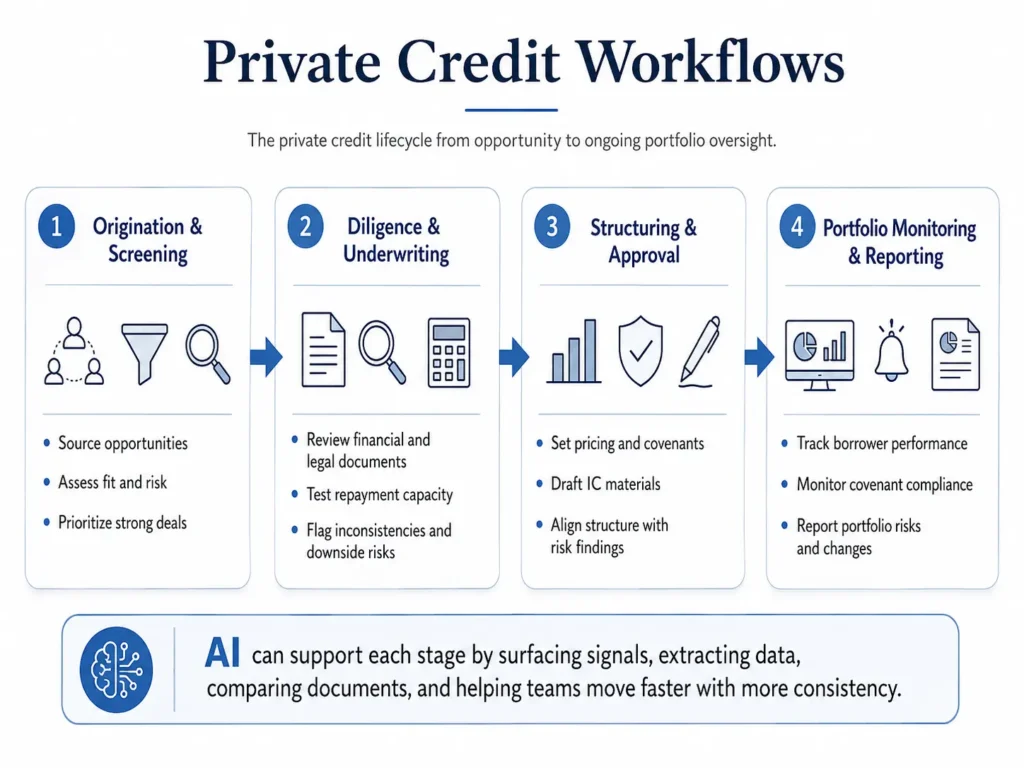
Across both stages, these AI tools let analysts work faster and stay focused on credit judgment, downside risk, and final credit decisions.
3. Xlagent and Octus for Structuring and Approval
AI helps structuring by pulling together diligence findings, covenant considerations, and past deal comparisons. It can also draft IC materials, flag missing sections, and check that risks found in review show up in the loan terms. Key tools include:
- Xlagent: This agent platform combines data-room materials, financials, and management presentations into a structured IC memo or investment proposal. Each claim remains linked to its original document. This helps teams bring diligence findings into the approval materials without rebuilding the analysis by hand.
- Octus: Its Deal Term Analytics function helps teams compare covenants, pricing, clauses, and other loan terms against a large library of direct-lending and syndicated deals, while its private credit data covers more than 12,500 deals. This gives structuring teams relevant precedents when setting terms around the borrower’s risks and negotiating against sponsors.
These AI-powered private credit tools allow teams to move from analysis to approval faster, with the final decision grounded in the borrower’s actual risk profile.
4. CovenantIQ and Ontra Insight for Portfolio Monitoring and Reporting
AI helps portfolio monitoring by extracting data from borrower reports and compliance certificates, tracking covenant obligations, and flagging early warning signals. It can also summarize performance changes and prepare portfolio updates, keeping pace as the book grows and each loan brings its own requirements, covenant definitions, and compliance tests. Key AI tools that support this stage include:
- CovenantIQ: This platform collects borrower reporting, normalizes financial data, and maps each covenant to the definitions in the loan agreement. It then calculates tests and links the results back to the underlying borrower information. That way, teams monitor covenant headroom, performance trends, and emerging concerns across bespoke middle-market loans.
- Ontra Insight for Credit: This solution turns credit agreements into structured covenant and obligation data. Teams can assign tasks, monitor reporting deadlines, and track events that could trigger a default. It also complements financial monitoring by helping teams manage the contractual requirements attached to each borrower and facility
That way, teams monitor more borrowers with the same headcount, spot issues earlier, and give investors real-time insights into portfolio performance and risk.
It’s clear that top AI platforms, tools, and solutions can improve performance across key private credit workflows. But how do you integrate these with your current systems so that they create reliable outputs and protect data privacy? And how can you ensure consistent use across teams?
That’s what we’ll explore in this next part of our guide.
How to Determine Whether These AI Platforms Work Safely
The platforms we’ve covered differ in how much of their output is an actual calculation versus an educated guess, while general-purpose assistants like ChatGPT, Copilot, or Claude sit at the other end of that spectrum.
For a private credit firm, the risk lies in sending numeric or legal analysis directly to these generic assistants. They predict a likely answer instead of calculating an exact one, so they can hallucinate, misread, or miscalculate.
That same risk applies to any custom agent built without a fixed calculation layer and an evaluation framework (evals) underneath it. The issue isn’t whether a tool is off-the-shelf or custom-built, it’s whether the math and legal analysis run through something more reliable than a probabilistic guess.
The tools that hold up for high-stakes private credit work — off-the-shelf or purpose-built — are the ones where the math or field-matching happens the same way every time, with a clear paper trail and guardrails that catch mistakes before they compound. Eigen’s field extraction, 9fin’s source-linked answers, and CovenantIQ’s covenant-definition mapping all work this way, and it’s the same standard a well-built custom agent has to meet.
Whether you’re buying tools or building in-house, the following needs to be in place for AI to work reliably and safely:
The Right Data and Context
A tool can only perform like your credit team if it can access the same data sources, safeguard borrower confidentiality, and apply the same judgment. This includes how the team sources deals, assesses borrowers, and sets terms. Otherwise, it may produce generic answers that credit teams can’t rely on for credit decisions.
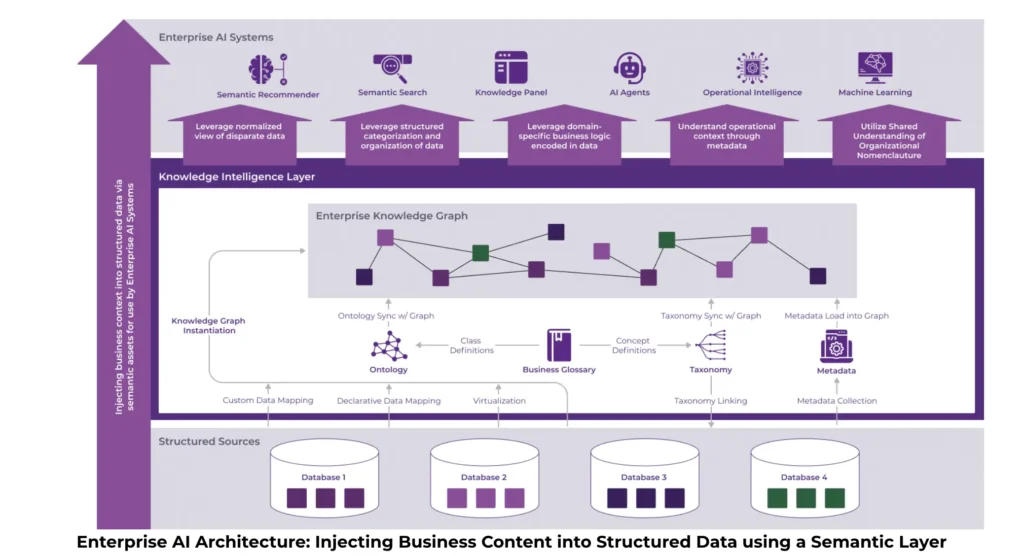
Image Source: “How to Inject Business Context into Structured Data using a Semantic Layer” by Urmi Majumder on Enterprise Knowledge
A Shared Foundation for AI Use
A shared foundation means having one set of firm-wide rules covering which tools teams can use, what data those tools can access, how borrower confidentiality is protected, and how outputs are checked before anyone acts on them. When every analyst develops their own approach, quality varies from deal to deal, introducing operational risks and potential regulatory exposure.
A Fixed Layer for Calculations, Backed by Evaluations and Guardrails
This setup helps a tool handle complex financial data and legal contracts more reliably. If these controls are missing, firms risk misread clauses and made-up figures in credit workflows where a single error can be very costly.
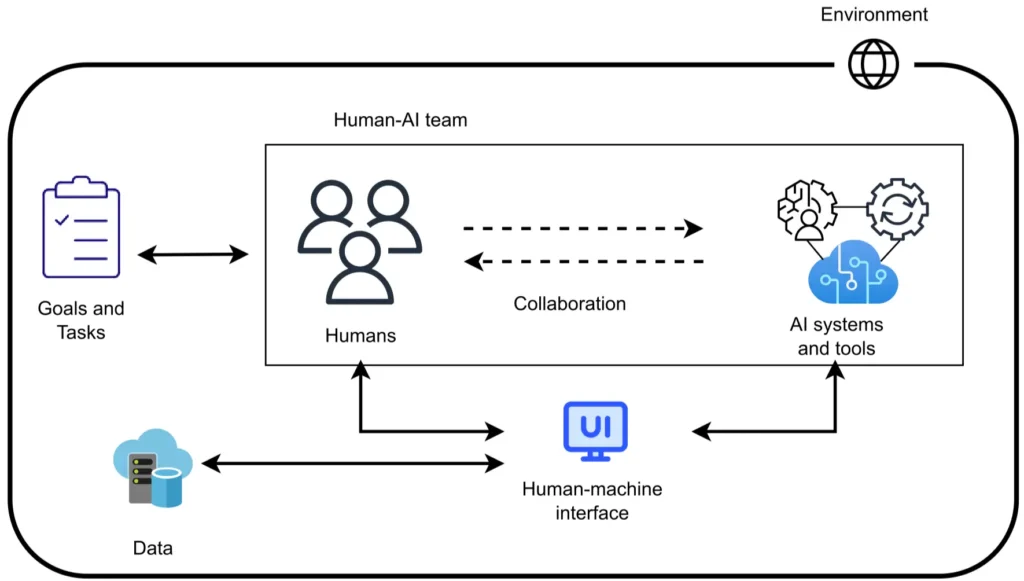
Image Source: “A Conceptual Framework for Human-AI Collaborative Genome Annotation” by Li et al. on Moonlight
Testing Standards Drawn From Your Firm’s Own Expertise
These define what good output looks like and are applied after every model update, system change, and at regular intervals. Without them, AI performance can drift, potentially introducing risk and regulatory exposure to the deal process.
What to Take into Consideration When Choosing Tools for Private Credit
Meeting the standards highlighted above gives you an indicator of whether a tool is safe to rely on. It doesn’t tell you which tools your firm actually needs, or how many of them to run.
Start with scope. Do you need an individual lifecycle-stage solution (i.e., point solution) or one connected system across the whole deal flow? The tools we’ve covered each serve a different stage, from Navatar for origination to Xlagent for structuring. A point solution improves one part of the process but leaves the remaining stages manual. Covering more of the lifecycle often means connecting several tools, which can increase costs and create additional governance work.
Integration is the next test. Can the tool actually plug into your existing CRM, data room, and portfolio systems, and can it apply your firm’s own credit criteria, thresholds, and approval rules? That is only possible when this logic is clearly documented and structured in a form the system can use, which is rarely true on day one. Connecting tools and data this way, while keeping everything within firmwide standards, gets complicated fast.
Then there’s build versus buy. Even a strong point solution, like 9fin for diligence, only covers one stage. A connected system across the whole lifecycle means deciding whether the added build is worth it, and building in-house brings its own load: data integration, calculation layers, access controls, evaluations, testing, ongoing maintenance.
Scope, integration, and build-versus-buy are hard calls to make from the outside, especially when the credit criteria and data structure a tool needs to work well live in your team’s heads rather than in a system. That’s where working with a partner experienced in both AI and private credit pays off, helping you make the right call, structure your data and processes for AI, and put the right controls around whichever path you choose.
How Neurons Lab Helps Build AI Private Credit Firms Can Trust
Disparate tools aren’t always the answer for private credit firms looking to adopt AI organization wide. Depending on where you’re starting, that might mean one connected system that works the way you actually lend, from origination through workout, grounded in your own workflows, data, and standards. It might mean getting every analyst running the same verified process before anyone builds something custom. Or it might mean knowing where to start at all.
Neurons Lab helps at every stage.
As an AI enablement partner, we help mid-market firms move from fragmented AI experiments to reliable AI adoption at scale. We serve organizations across the US, Europe, and Asia, and combine executive training, AI adoption programs, and custom agentic AI solutions to support secure, practical deployment. Clients build operational AI capability aligned with core workflows, governance, and business priorities.
Trusted by 100+ clients, including HSBC, Visa, and AXA, we’ve accelerated AI integration in banking, wealth management, private equity, investment firms, fintechs, and other highly regulated industries.
Here’s how you’ll benefit from partnering with us for implementing AI in private credit lifecycles:
Handle the Workflows that Point Tools Can’t with Custom Development
Point solutions can improve individual stages of the private credit lifecycle, but they don’t create one consistent process across the full deal flow. Firms are left moving information between tools, repeating manual work, and applying their rules and controls separately at each stage. Neurons Lab helps firms move beyond these limits through custom development.
We build custom agents designed around your specific workflows, data, and compliance requirements. Together, agents form one connected system from origination to monitoring. They also integrate safely with your CRM, proprietary data feeds, and Excel models.
Every build runs calculations through a fixed, traceable layer, with evals and guardrails in place to catch mistakes before they compound. That way, teams can test covenants, spread financials, and review legal documents without the errors that turn into losses.
A wealth management firm we worked with shows how this tailored approach works in practice. Its relationship managers were losing time to manual tasks, compliance checks, and data gathering across disconnected systems, and off-the-shelf tools couldn’t handle the complexity.
We built a custom agentic AI system grounded in the firm’s expertise and data. Relationship managers now prioritize opportunities, pull market intelligence, prep meetings, and generate product recommendations through one conversational interface. The firm reached twice as many clients each month and increased net promoter score (NPS) by 15%.
Put AI to Work Consistently Across Your Credit Team with Embedded Delivery
Without a consistent standard for AI use across the firm, every analyst uses it differently, leading to inconsistent processes, unmanaged credit risk and credit decisions you can’t retrace under scrutiny.
With Neurons Lab, you can build one governed workflow, so every analyst runs the same verified process when they check a covenant or spread financials with AI. That starts with guardrails and firm-wide standards we help you establish. These cover which AI tools teams can use, what data AI can access, and who reviews outputs before they feed into credit decisions.
You’ll get forward-deployed engineers who work alongside your teams to capture and document your expertise in past deals, underwriting rules, and review processes, and turn that knowledge into structured context AI can use. This means AI reflects how you actually evaluate borrowers and handle risk monitoring.
With role-specific training, your credit, portfolio, and operations teams learn how to do their daily work with AI, spreading financials, pressure-testing outputs, and applying reusable workflows. The judgment behind your best deals becomes something your team can reuse, not rebuild deal by deal.
Then AI-native workflow design integrates AI where it creates the most value without disrupting your operations, so your teams stay focused on judgment-led work like assessing credit.
For example, a major European credit institution couldn’t get every department following the same process. We turned their experts’ know-how into testable AI agent protocols scored against compliance benchmarks. This system is now running safely in production, with a 4.3/5 user acceptance score and protocols reused across departments to cut costs by 20 to 40%.
Applied to your firm, that means every analyst runs the same verified process, your best judgment gets repeated across deals, and your team moves faster across origination, underwriting, and covenant monitoring, without losing control over risk.
Know Where to Start with a Tailored AI Roadmap
If your AI use has stalled at the work that matters, it’s understandable. That hesitation to use AI for high-risk tasks is common. Neurons Lab helps you understand exactly where to start safely with a tailored AI adoption program.
Through our executive AI briefing, leadership walks away knowing which workflows are safe to automate now and which need a different approach first.
Our AI adoption diagnostic then reviews how work happens, where credit teams spend the most time, and where bottlenecks sit. This gives you clarity on where AI can improve capacity, reduce manual review, and create measurable value first.
You then get a step-by-step AI roadmap designed around your workflows, systems, and governance needs. So instead of AI that stops at simple tasks, you have a practical path for moving it into your credit workflows.
This is the approach we took with a venture capital firm. Its analysts were losing hours per deal on research, diligence prep, and memo drafting, with no shared playbook. We co-created the firm’s AI strategy and delivered six workshops built around real fund workflows, and shared AI toolkit and adoption roadmap. This gave the firm a clear path to reclaiming those hours, with every team working the same way.
The Best AI for Private Credit Is a Reliable System, Not One Tool
AI that works across the entire credit lifecycle depends on one system built around how your deals move, with the risky parts made reliable by design.
This means across complex financial analysis and legal work, AI builds fixed calculation tools rather than running the math itself, with evals and guardrails that catch mistakes before they compound, so credit teams can move faster while staying grounded in their firm’s data, standards, and deal logic.
Building this takes a partner experienced in both AI and private credit. That’s exactly what you get with Neurons Lab. We work with you to find where the real risk is, so you’re not guessing. Then we help you build a system that counters that risk and covers you where standard AI tools fall short.
If you’re ready to move from AI experimentation to AI adoption without costly errors across your credit workflows, book a call with us today.
FAQs
What is the best AI tool for private credit?
The best AI for private credit isn’t one tool. It’s a system built around how your firm works, one that connects your data, standards, and workflows across the credit lifecycle, so AI runs reliably and without costly errors.
Do private credit firms need off-the-shelf tools or custom AI agents?
Private credit firms often need both off-the-shelf tools and custom AI agents. Off-the-shelf tools work well for individual tasks like summarizing borrower materials and drafting credit memos. With custom configuration, they can even connect to your data and systems to handle multiple tasks independently. Meanwhile, custom agents cover where those tools fall short, like covenant monitoring across a whole portfolio or financial modeling that connects your CRM, data feeds, and Excel models.
Is generative AI safe to use for covenant testing or financial spreading?
Generative AI isn’t safe to use on its own for covenant testing or financial spreading. It’s probabilistic, so it can misread figures or miss clauses, and in lending those errors mean mispriced risk or missed breaches. A safer setup uses AI to build fixed calculation tools that run the math the same way every time, backed by evals and guardrails that catch mistakes before they compound.
Sources
- https://www.navatargroup.com/private-credit-software/
- https://www.sourcescrub.com/
- https://www.9fin.com/privatecredit
- https://www.sirion.ai/solutions/credit-agreements-and-collateral-documentation-contract-management/
- https://www.xlagent.ai/
- https://octus.com/campaigns/private-credit/
- https://www.covenantiq.io/
- https://www.ontra.ai/solutions/private-credit/