
If you’re a mid-size financial services firm researching OpenAI, chances are your teams are already using it:
- Your business teams, from legal and compliance to wealth management and operations, use ChatGPT Work for one-off tasks, such as market research, due diligence, and drafting client emails.
- Your engineering team uses Codex for individual coding tasks, while developers still manage much of the surrounding work themselves, from providing context and assigning tasks to moving work between tools.
However, OpenAI use remains inconsistent across departments, making it difficult to govern, evaluate, or scale what’s working organization-wide, while reliance on manual oversight limits the productivity gains AI can deliver across the wider development lifecycle.
And neither Work or Codex can manage some of the complex or large-scale use cases that require continuous automation, high-volume market or transaction data processing, or direct client service.
As an AI enablement partner with experience helping financial services firms adopt and build AI, Neurons Lab has seen what separates basic tool usage from adoption that produces measurable gains in productivity, speed, and decision making.
Drawing on that experience, we’ll look at how firms can apply OpenAI more effectively across business and engineering teams, where stronger governance and enablement matter, and when custom development makes sense.
In this article:
- How OpenAI Works for Financial Services
- What To Take Into Consideration Before Using OpenAI as an FSI
- When Custom Solutions Make Sense vs OpenAI for Financial Services Firms
- How Neurons Lab Helps FSIs Get More Business Value From OpenAI
- How an Investment Firm Used AI to Reduce Manual Reporting Work by 80%
- FAQs
Want to use OpenAI more effectively across your firm? Neurons Lab can help. Let’s talk.
How OpenAI Works For Financial Services
Like Anthropic’s Claude for Financial Services and Perplexity Finance, OpenAI has dedicated solutions for financial services along with broader tools that can complement FSI work.
For example, ChatGPT for Financial Services combines OpenAI models with built-in financial data from providers like FactSet, Daloopa, PitchBook, and LSEG News. Financial professionals can use it for financial modeling, earnings analysis, and client materials, with figures and claims linked back to source material for review.
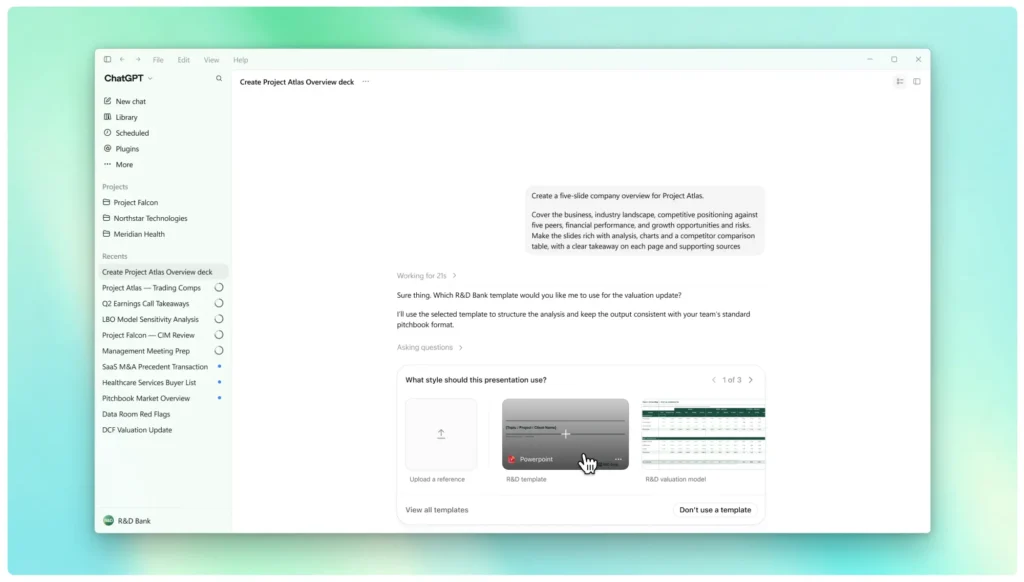
Financial institutions can publish Excel, Word, and PowerPoint templates via a dedicated admin page in OpenAI’s ChatGPT for Financial Services – Image source: OpenAI
OpenAI’s financial services ecosystem also extends beyond ChatGPT for Financial Services, with broader tools for business (i.e., compliance, legal, client-facing services) and engineering teams, and custom applications.
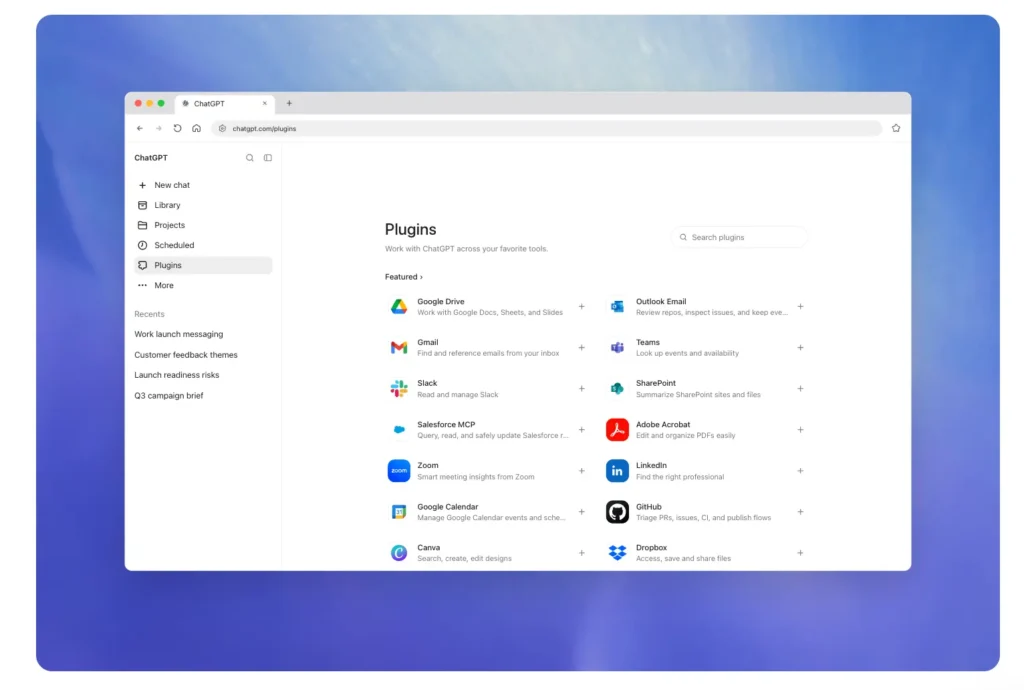
ChatGPT Work can use your files, plugins, and approved tools to retrieve information, run workflows, and complete work for review – Image source: ChatGPT
For business teams, ChatGPT Work can handle longer, multi-step tasks across files, company data, and connected tools, such as Google Drive, SharePoint, and Salesforce. For example, a private credit analyst can ask it to pull a borrower pack from SharePoint, extract the key financial statements and risk factors, and then use the output to draft a first-pass credit memo for review.
Engineering teams can use Codex as a coding agent that works across repositories and development tools. For instance, an engineer at a mid-market insurer can ask it to update a pricing rule in a claims platform, then review the output and integrate the changes themselves.
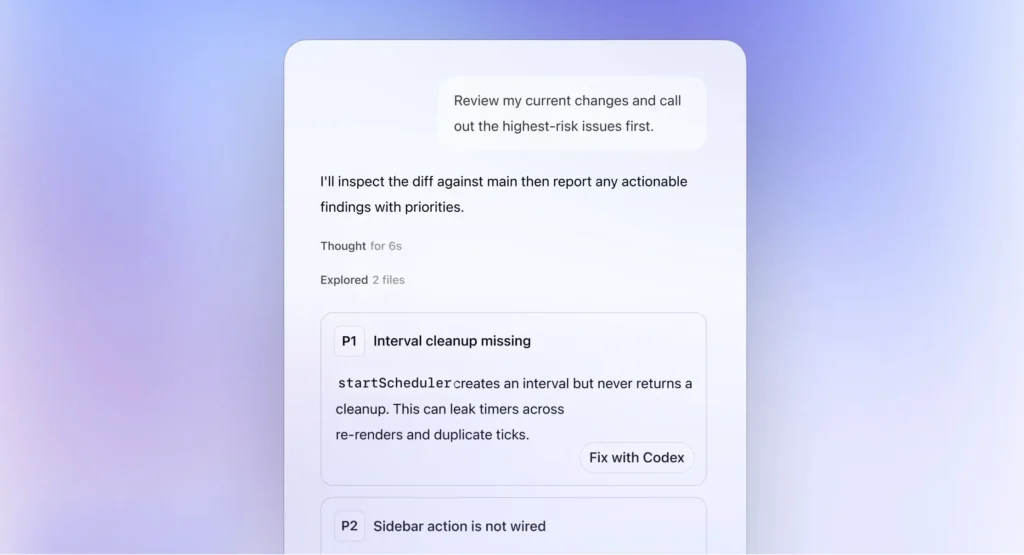
Codex completes tasks end-to-end, like building features, complex refactors and migrations – Image source: OpenAI
And when firms want to build their own AI applications, the OpenAI API lets developers connect its models, including GPT-6 Astra, to proprietary data, tools, and business systems. This provides the building blocks for AI-powered use cases in various financial sectors, such as:
- A family office background agent that monitors portfolio data and relevant market events, then alerts the investment team when something changes.
- A private credit underwriting application that analyzes borrower documents, financial data, and internal lending criteria to support credit assessment.
- A boutique investment banking voice assistant that lets bankers query internal deal information, CRM data, and company research using natural conversation.
Together, ChatGPT Work, Codex and the OpenAI API give financial services firms different ways to handle business tasks, software development, and custom AI applications.
But each raises different questions around consistency, risk, autonomy, and investment as usage expands.
What to Take Into Consideration Before Using OpenAI As An FSI
OpenAI can support work across business and engineering teams, and firms like Morgan Stanley have already used it to build an assistant for their financial advisors. But before you can rely on it for higher-stakes workflows, it’s important to consider how you’ll keep usage compliant, reliable and effective.
This includes governing what AI can access, what actions it can take, and where additional controls, human review, or custom development may be needed. Here’s what to consider across ChatGPT, Codex, and custom development via the API, along with what changes once you’re relying on all three at once.
Unstructured ChatGPT Use Makes Business Value Harder to See
Without firm-wide standards for AI use, relationship managers, compliance officers and legal teams can develop their own prompts and ways of using ChatGPT. This fragmented use makes it harder to see which workflows deliver measurable productivity gains versus isolated experimentation.
It also becomes difficult to decide which use cases are worth standardizing or investing in further. There’s also the added compliance exposure risk when non-technical employees use client, KYC, AML, or other sensitive data without consistent access rules or review steps.
More Coding Autonomy Can Increase Reliability Risk
Handing more of your development lifecycle to an agent may increase productivity, but it also adds reliability risk. Generated code may look right during development, but it can introduce errors, security issues, or unexpected behavior in production.
At the same time, requiring developers to check every step can reduce the productivity gains that greater automation is meant to deliver. The challenge is deciding how much work Codex can handle independently and where developers still need to stay accountable.
Custom Development Can Pay Off When the Workflow Justifies It
Custom development gives you more control over how AI connects to proprietary data, systems, and business logic. And when it’s built on your own technical stack and owned by you, you’re not limited by the constraints of a pre-build product.
But it also requires engineering, integration, testing, and ongoing maintenance, so the payoff comes from choosing the right workflows. For mid-size financial services firms with leaner teams and tighter budgets, the goal is to figure out which workflows genuinely justifies that level of control, and which can still be handled effectively inside Work or Codex.
Running All Three Tiers Together Makes Oversight Harder to Maintain
Across ChatGPT Work, Codex, and custom applications, maintaining firm-wide oversight becomes harder as different teams make decisions independently. Without clear ownership, leaders may not know which AI workflows exist across departments, what data OpenAI tools can access, or whether outputs remain reliable as requirements, data, and processes change. Different teams may also apply different rules for access and human review, making consistent governance harder to maintain across the firm.
These considerations shape how safely and effectively firms can expand OpenAI use. But there is another decision to make as workflows become more complex: whether ChatGPT Work or Codex can support them at all. As we’ll cover next, these prebuilt AI products can only take you so far.
When Customizing OpenAI for Financial Services Firms Makes Sense
Custom development makes sense when OpenAI’s prebuilt products don’t have all the connections, business logic, controls, or actions a workflow requires.
For business teams, this can happen when a workflow needs to span several internal systems or run without someone manually starting each step. For example, a research process may work well in ChatGPT Work, but an asset management firm may eventually want an agent that monitors CRM and market data like earnings transcripts for relevant changes, analyzes the potential impact on affected client portfolios, and sends the result to an analyst automatically.
Engineering teams can reach a similar point with Codex. The coding agent can take on substantial development work, but firms may need a custom solution when agents must work across proprietary systems, internal infrastructure, and firm-specific processes beyond the standard development environment.
For example, updating a single feature in a claims platform might work well in Codex, but an insurer may eventually want an agent that pulls data from a legacy policy administration system, applies firm-specific underwriting rules, and routes changes through internal approval workflows that Codex doesn’t support out of the box.
In these cases, firms can use the OpenAI API to build custom applications around its models for workflows that require more scale, integration, or firm-specific functionality. Deciding where Work or Codex is enough and where custom development will create more value requires both technical and financial services expertise. This is where it helps to work with an experienced third party.
The right AI enablement partner can review how your business and engineering teams are currently using OpenAI, shape a strategy around your workflows and priorities, and help you scale adoption in a way you can govern and evaluate consistently.
How Neurons Lab Helps FSIs Get Real Business Results From OpenAI
Moving from individual use to consistent OpenAI adoption across departments is difficult without a clear approach to which workflows to prioritize, how teams should use them, who owns them, and how performance is evaluated over time.
Neurons Lab helps financial services firms put that structure in place with executive training, tailored AI adoption programs, governance support, and custom AI development. We help firms move from isolated use cases to repeatable workflows that align with business priorities.
Through practical enablement, we help teams build reusable, shareable workflows (i.e., AI skills) that include instructions, examples, code, and supporting resources. Firms receive support in establishing a shared operating model for OpenAI that defines who owns each workflow, who can approve new workflows or changes to existing AI skills, and who remains accountable for outputs. This gives teams clearer standards for keeping workflows consistent and reliable as adoption grows.
Trusted by 100+ clients across the US, Europe, and Asia, including HSBC, Visa, and AXA, Neurons Lab has supported AI integration across banking, wealth management, private equity, investment firms, fintechs, and other highly regulated industries.
By working with us:
You’ll Go From One-Off OpenAI Usage to Higher-Value Workflows
Like many financial services firms, your business teams may already use ChatGPT for research, summarization, drafting, and other one-off tasks. But usage often stays at the individual level.
Neurons Lab helps you move from this scattered usage to repeatable, higher-value workflows through tailored AI adoption.
You start by identifying where existing use is already delivering results and where there is a stronger business case to go further. Executive AI workshops help leaders map OpenAI for Financial Services to the firm’s wider AI strategy, prioritize the most promising use cases, and focus investment on workflows with measurable potential.
Role-specific training helps teams apply ChatGPT Work consistently to the tasks they already perform. They learn how to connect approved company data and tools, provide the right instructions and context, build repeatable workflows, and add human review where required.
By establishing governance and ownership, we also help you define who approves each workflow before wider use, who owns it, and who is responsible for updates as requirements change. This gives you the documented ownership and human-review trail that regulations like the EU AI Act expect for higher-risk uses, such as credit assessment. With Neurons Lab, you’ll keep expansion controlled and consistent rather than creating another layer of fragmented AI activity.
For example, you can standardize a KYC workflow in ChatGPT Work. The onboarding team can use it to review client documents, pull out key information, and prepare a first-pass summary for review. Once the process is proven, you can formalize it as a reusable skill for compliance teams to use during periodic customer reviews, with role-based access controls for how both teams apply it.
This helps firms replace isolated prompting with proven workflows that can be shared, measured, governed, and scaled across teams. Employees spend less time on repetitive preparation work while the firm gains a clearer view of where OpenAI is delivering measurable results.
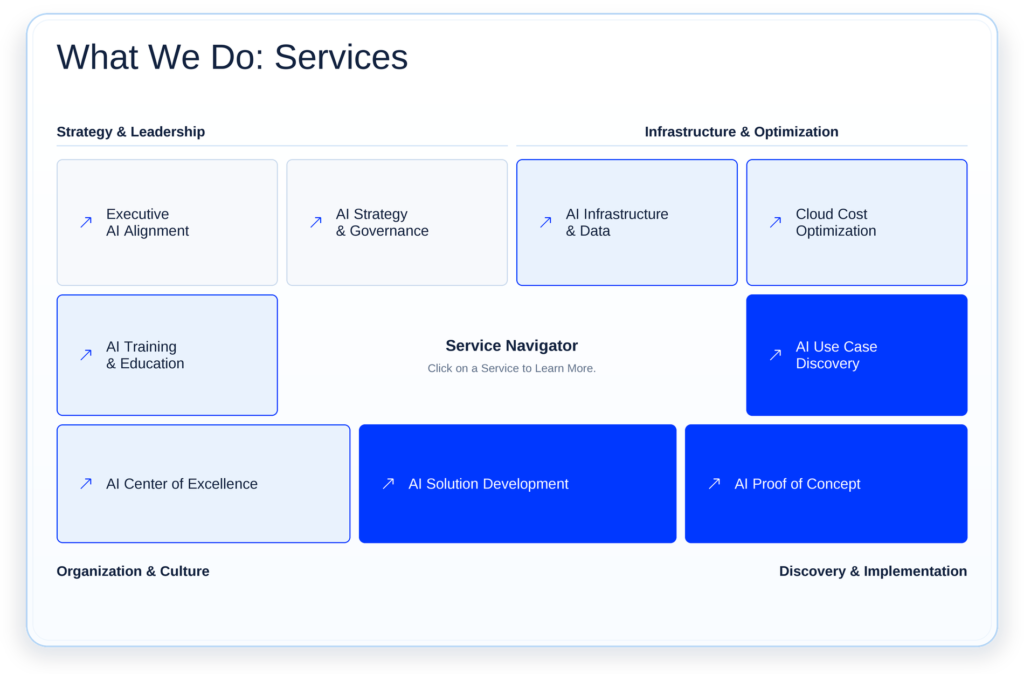
Neurons Lab end-to-end AI services for financial services firms
You’ll Move Engineering Teams From AI-Assisted Coding to Agentic Software Development
Your engineering teams may already use AI to help them write, explain, test, or review code.
However, the bigger opportunity is moving beyond isolated coding assistance and extending AI across the software development lifecycle. With Neurons Lab, you can make that shift.
We help your teams integrate OpenAI’s Codex into your development toolchain and connect it to repositories and issue trackers through Model Context Protocol (MCP) connections. Teams learn how to build reusable engineering skills libraries and add safety hooks and human review points around agentic work in financial services.
Once connected to your wider development environment, Codex can support a broader range of engineering tasks. This includes updating client-facing portals and internal investment platforms, as well as maintaining integrations between core systems and newer applications.
As agents take on more of that repeatable work, human oversight still matters. Your engineers remain responsible for architecture, review, security, and other higher-impact technical decisions. The result is greater capacity to modernize systems and deliver new functionality faster, while staying within FSI compliance requirements.
You’ll Scale from Work and Codex into Custom AI Agents When it’s Worth the Investment
It can be difficult to know how far prebuilt products like Work or Codex can support regulated workflows and when custom development is justified. Neurons Lab helps you make that call and supports you through either path, including running and improving custom agents once they’re live.
Our AI and financial services expertise means you get a clear read on which workflows can stay within the OpenAI environment and what needs a more custom approach. That can range from a credit memo workflow for a private credit firm, a claims platform update for an insurer, or a CRM-triggered research workflow for an asset manager. That way, you avoid wasting time trying to fit complex workflows into tools that can’t support them properly out of the box.
When OpenAI’s prebuilt products are no longer enough, we build custom agents around its frontier models that combine your proprietary data, firm-specific business logic, approval processes, and internal systems. This lets you automate more complex workflows, reduce manual handoffs, and achieve greater productivity gains.
Once agents are live, our embedded engineers can run and improve them as managed capacity, so your leaner team isn’t left maintaining them. They keep agents current as your data, systems, and requirements change, and refine them based on how they perform.
To ensure your custom AI agents continue to perform as expected, those engineers help set up evaluation frameworks that measure AI performance against clear standards for each workflow. That can range from comparing a custom equity research to underwriting agent’s outputs against analyst-reviewed decisions on a set schedule to catch any drift in accuracy early on and keep performance reliable over time.
Our product-to-custom development path means you don’t have to invest heavily in a custom build from the outset. You can start with ChatGPT Work or Codex, prove the workflow and its business value, then move into custom development when you need more autonomy, integration, scale, or control.
For example, an investment banker’s research workflow could start in Work with an analyst initiating and reviewing each run. Once proven, it could become a background agent that connects directly to internal systems and responds automatically when new data or relevant events appear. This gives you a structured path from initial adoption to more advanced AI workflows while building on use cases that have already shown value.
How an Investment Firm Customized AI to Reduce Manual Reporting Work by 80%
An established European investment firm was facing challenges with its existing reporting process:
- The team spent around 20 days each month gathering and validating data from different sources.
- Slow financial analysis and reporting delayed critical insights, affecting investor decision-making and confidence.
- Outdated systems made it difficult to adapt reports as data requirements and regulations changed.
Because the process needed deeper integration than a standalone AI tool could provide, we built a custom AI solution that connected the workflow end to end. This reduced manual intervention by 80% and gave the team more time for analysis and investor engagement.
The firm also cut reporting time from 20 days to 5 days, reduced errors by 90%, and improved turnaround time by 60%.
This case study shows why custom development matters when AI needs to work across multiple data sources, legacy systems, and firm-specific processes. Connecting those pieces can automate more of the workflow and deliver greater productivity gains.
Work With an AI Enablement Partner to Scale OpenAI Effectively Across Your Financial Services Firm
For financial services firms, OpenAI provides several ways to apply artificial intelligence across business teams, engineering, and custom applications. But access alone doesn’t guarantee outcomes like greater productivity, faster workflows, or better decision-making.
Getting the most value out of it means moving business teams from scattered ChatGPT use to repeatable workflows, giving Codex enough autonomy to support more of the development lifecycle without losing human oversight, and knowing when a proven use case is worth extending into a custom agent. It also means keeping ownership, access, and performance standards consistent as use expands across the firm.
As a consultancy and enablement partner with proven experience in both AI and financial services, Neurons Lab helps bring those pieces together. That way, OpenAI becomes part of how your teams work across key processes rather than another AI tool used for isolated tasks.
If you want to scale OpenAI across your firm in a more effective and compliant way, get in touch with Neurons Lab today.
FAQs
Can OpenAI connect securely to proprietary financial data and legacy systems?
Yes. OpenAI can connect to proprietary data and legacy systems through APIs, connectors, and custom integrations. Security depends on how access, permissions, and data flows are configured. For mid-size firms, an experienced AI enablement partner can assess the existing architecture and build compliant custom integrations where prebuilt connections are not enough.
What are the biggest risks of using OpenAI in financial services?
The risks differ by application. Unstructured ChatGPT Work use can create compliance and data exposure risks when employees handle sensitive client information. Greater Codex autonomy can produce code that looks correct but fails in production. Forcing complex workflows into prebuilt tools like ChatGPT can also lead to unreliable outputs, manual workarounds and processes that are hard to scale. This is when custom development can make more sense..
Can OpenAI support regulated workflows such as KYC, AML, insurance claims, or investment research?
Yes. OpenAI can support regulated workflows when connected to the right data and configured around firm-specific processes and business logic. Firms can also set access rules, require human review at higher-risk steps, and continuously evaluate output quality. More complex workflows may require custom integrations or agents rather than relying on prebuilt OpenAI products alone.
Sources
https://openai.com/business/solutions/finance/
https://openai.com/chatgpt-work/
https://learn.chatgpt.com/use-cases/collections/finance
https://openai.com/index/introducing-chatgpt-financial-services/