
As a mid-size financial services firm handling highly sensitive, proprietary, or competitively valuable information, you may have stricter limits on what can be shared with third-party AI providers. If you’re relying on Claude Cowork as an AI coworker, as usage expands, requirements around governance, costs, and functionality can become harder to manage within a single packaged tool. So, you’re ready to start comparing alternatives.
However, choosing the right option may involve more than simply switching products. For many financial services firms, another commercial workspace may not resolve all of these issues. In some cases, addressing them requires a different approach to how your underlying AI system is designed and managed.
Neurons Lab is an AI engineering partner focused on financial services. We work with Claude and Cowork regularly, and through our deployments we’ve helped FSIs understand where they fit, where their requirements may outgrow them, and what to consider when looking beyond them. That’s what we’ll share in this guide.
In this article, we cover:
- What’s Driving Your Search for a Claude Cowork Alternative
- The 4 Claude Cowork Alternatives to Consider are Open Source
- What to Consider When Choosing an Alternative to Cowork
- How Neurons Lab Can Help You Choose and Implement the Right Cowork Alternative
- How A Capital Markets Fintech Turned Fragmented Workflows Into Real-Time Deal Intelligence With a Custom AI Solution
- FAQs
Want to explore your options and choose the right Claude Cowork alternative for your firm? Neurons Lab can help. Let’s talk.
Key Takeaways
- Another commercial workspace may not fix the problem you’re trying to solve. Claude Cowork and similar products follow the same structure of provider-supplied model, harness, and application. That means limits around data handling, governance, cost and functionality can carry over.
- Open-source alternatives can give you more control. OpenWork, OpenClaw, Hermes Agent, and DeepSeek Harness let you choose more of the model, harness and application layers yourself and host more of the system in your own environment.
- Owning more doesn’t mean owning everything. A best practice is keeping lower-risk work on commercial tools and moving only sensitive or specialized workflows into a custom environment.
- Ownership brings build and maintenance work. Understand your technical capacity and usage levels first. Self-hosting can pay off only as usage grows, and renting is often cheaper at lower volumes.
- The best fit depends on what you want to own, control and manage. An experienced AI enablement partner like Neurons Lab can help you assess your options and carry the chosen option through to implementation.
What’s Driving Your Search for a Claude Cowork Alternative
Before comparing alternatives, it helps to understand exactly what is making Cowork feel limiting for your firm. For many mid-size financial services companies, especially private equity firms, wealth managers, and family offices handling highly confidential client and financial data, it often comes down to the following:
You Want to Reduce Your Dependence on a Third-Party AI Provider
For financial services firms handling highly sensitive information, from HNWI client data to investment research and proprietary deal information, data exposure or loss of control over how that data is used can mean regulatory penalties, damaged client trust, or weakened reputation.
Claude Cowork is a trusted, high-quality tool that we use regularly at Neurons Lab. For some firms, though, the fact that it is a third-party platform handling parts of sensitive workflows, such as due diligence, investment analysis, and client document review, is the main consideration. If you’re a quantitative investment firm, that could include proprietary trading research or sources of alpha that directly affect your competitive advantage.
So, you might have concerns about where your data goes, who handles it, how much your firm retains, and ultimately, becoming too dependent on it for those critical workflows.
That dependency comes with real risks. Updates to model availability, vendor policies, regulation, or government policy could interrupt workflows your teams rely on and force you to quickly find another way to keep those processes running. This isn’t hypothetical. In mid 2026, a US export-control order briefly cut off access to two of Anthropic’s flagship models before it was lifted a month later.
For financial firms, this is known as AI sovereignty: owning your model, infrastructure, and data flows, without dependence on a single provider for all three. That way, your firm can stay resilient even when circumstances outside your control change.
You’ve Reached Claude Cowork’s Limits For More Complex Workflows
Claude Cowork may have worked well when you primarily used it to research companies and markets, analyze documents, and complete other knowledge-work tasks. But you are now looking for more measurable business outcomes from AI, such as increasing analyst capacity, shortening research cycles, or handling more customer interactions.
That means moving into higher-value workflows that run continuously or process much larger volumes of information without you having to initiate individual tasks.
For example, as an investment firm, you may want agents that continuously screen public markets or new deals and alert your analysts through Microsoft Teams, Slack, or Google Workspace, as relevant opportunities emerge. This could help your team review more opportunities without manually monitoring every source. Or, as a fintech, you may want voice agents that answer, route, and summarize large volumes of customer calls as they happen, helping you handle peak demand without adding the same level of support capacity.
Cowork is built for interactive, human-led knowledge work, so continuous, large-scale background analysis and data processing sit outside what it can do. So, you may be looking for greater flexibility to build AI around your own workflows, data and systems rather than being limited to Cowork’s built-in capabilities.
Your AI Costs Are Becoming Harder To Manage As Usage Grows
As a mid-size financial services firm, Claude Cowork may have been relatively cost-effective when a small number of employees used it for research, document analysis, and other ad hoc tasks. But as more teams are now using Claude across your firm, those costs are adding up and becoming a more significant operating expense.
Part of that challenge is that Cowork gives you limited control over model choice for different types of work. For example, complex investment analysis may justify Claude Fable 5.1, while routine document processing or report preparation may perform just as well on Claude Sonnet.
This matters because flagship models like Fable can cost several times more than lower-cost models, yet not every task needs their advanced capabilities. At scale, using higher-cost models where they’re not necessary can quickly add to your AI spend.
So you might be looking for the ability to route work by cost, sending suitable tasks to lower-cost commercial or open models and reserving more expensive models for tasks that justify the additional cost.
You Need Tighter Governance and Security Controls
As your use of Claude Cowork spreads across more teams and workflows, sensitive data can still slip through existing controls, even when employees are using the tool consistently and within established processes.This becomes more challenging in higher-risk workflows, such as private equity due diligence involving confidential company information.
Cowork’s built-in controls are designed for general use, so firms with stricter data requirements may need additional guardrails to prevent sensitive data from being shared. For example, an employee might upload client information, or other restricted data for Claude to analyze. Without those additional guardrails, this can lead to data leaks, credential compromise, and compliance exposure.
Without a clear governance framework, consistently enforcing your security, data-handling, and model-usage policies becomes increasingly difficult. You want greater control over how sensitive data is handled and which models to use for each task, including the ability to trace requests, verify what information was accessed, enforce usage policies, and maintain a clear audit trail.
Why Cowork Alternatives Might Not Be Enough
What many firms may not see is that the functionality, cost, governance, and ownership issues making you reconsider Claude Cowork are likely to carry over into any other commercial AI workspace. That’s because Cowork and similar products follow the same basic structure: a provider supplies the model, builds the harness (the skills, connectors, controls, and other tools around the model), and packages everything into an application your teams can use.
For example, Anthropic combines its Claude models with its own harness and interfaces such as Claude Code and Cowork. Moving to OpenAI would give you GPT models surrounded by OpenAI’s tools, connectors, and controls through ChatGPT Work.
Switching products would therefore change the provider, models, and what comes in the package, but still leave many underlying decisions in a provider’s hands, including model availability, data handling, deployment options, and the controls built into the product. This can make it harder to meet firm-specific compliance requirements, or adapt quickly if provider pricing, availability, or policies change.
Open-source alternatives change that by giving you more control over data, infrastructure, governance, and models. You can decide where sensitive information can go, what your AI can do (including computer use), how much different workloads cost, and what safeguards apply.
The 4 Claude Cowork Alternatives to Consider Are Open Source
| Alternative | What it is | Model flexibility | Key benefit |
|---|---|---|---|
| OpenWork | Open-source desktop workspace built as an alternative to Claude Cowork | Supports multiple model providers, including OpenAI, Anthropic, and Mistral | Skills, MCPs, plugins, and connected services, so teams are not tied to one vendor or model |
| OpenClaw | Open-source agent | Works with hosted or local models, such as Claude for complex, tool-heavy tasks or Qwen for local processing | Interchangeable model layer, so teams can switch providers or fall back to another model without rebuilding the agent |
| Hermes Agent | Self-hosted, open-source AI agent | Works with different model providers or a custom model endpoint | Matches each task to the model and infrastructure that best fits its privacy, governance, performance, and cost needs |
| DeepSeek Harness | Open-source agent harness | Models, tools, skills, sessions, storage, scheduling, and the interface can be replaced | Technical teams can shape their AI system around their own requirements |
With open-source alternatives, you have more say over how your AI solution is put together. Instead of accepting one provider’s models, skills, connectors, and controls as a fixed package, you can choose some of those components yourself and host more of the AI system in your own environment. This puts the AI sovereignty discussed earlier into practice, helping your firm meet regulatory requirements and adapt more quickly as new technology emerges.
You also do not have to own every part of the AI system. You can choose how much of the model, harness, and application layers you want to own depending on your requirements and budget. For example, you can host an open-source or open-weight model on your own servers, create your own harness with your own connectors, hooks, and guardrails, and even build your own application on top. This flexibility lets you balance control, cost, and complexity instead of taking on more ownership than your firm actually needs.
A number of open-source tools like OpenClaw already make this kind of approach possible. Here’s a closer look at four worth considering:
1. OpenWork
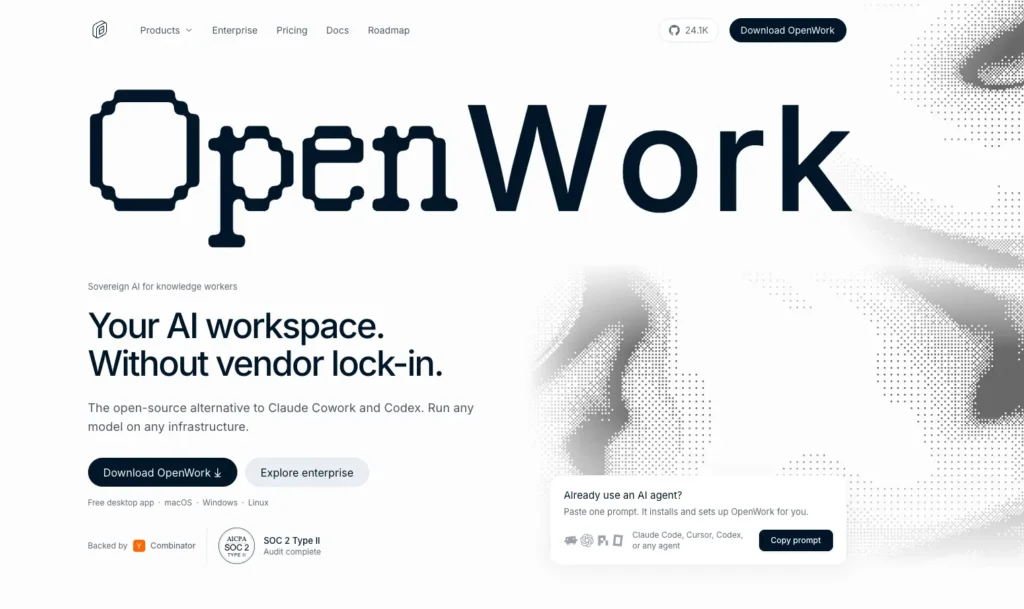
OpenWork is an open-source desktop workspace built as an alternative to Claude Cowork1. It supports multiple model providers (OpenAI, Anthropic and options like Mistral).It also supports skills, MCPs, plugins, and connected services, so teams are not tied to one vendor or model and can adapt the system as their requirements change.
2. OpenClaw
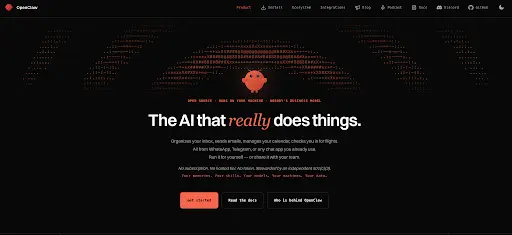
OpenClaw is an open-source agent that can work with hosted or local models like Claude for more complex, tool-heavy tasks or Qwen for workloads where local processing and greater control over data matter 2. Because the model layer is interchangeable, teams can switch providers or fall back to another model without rebuilding the rest of the agent architecture, giving them more flexibility if costs, performance, or provider availability change.
3. Hermes Agent
Hermes Agent is a self-hosted, open-source AI agent that works with different model providers or a custom model endpoint3. This lets firms match each task to the model and infrastructure that best fits its privacy, governance, performance, and cost needs.
4. DeepSeek Harness
DeepSeek Harness is an open-source agent harness where models, tools, skills, sessions, storage, scheduling, and the interface can be replaced4. This gives technical teams more flexibility to shape their AI system around their requirements.
Open-source and self-hosted alternatives remove some of the limits of a commercial solution, but they also place more technical demands on your firm. This includes a range of decisions you may not have had to think about with Cowork, such as which components to use, how they fit together, where they run, and who will maintain them. That’s what we cover in the next section.
What to Consider When Choosing an Alternative to Cowork
Decisions around how much of the AI system you own, what your team can support, and what makes financial sense can shape how practical and sustainable your chosen approach is over time. Thinking them through upfront helps you solve one limitation without creating new challenges around cost, resources, or maintenance.
Here’s what to consider:
How Much Control You Need Determines How You Approach AI
Moving away from Cowork does not mean every model, application, or piece of infrastructure has to become open source or self-hosted. The right mix can vary depending on how sensitive the workflow is, what functionality it requires, and how much independence from a provider matters.
For example, lower-risk work can remain in Cowork or a similar commercial alternative, while confidential or highly specialized workflows move into a custom environment. You could also continue using commercial models but run them through infrastructure in a jurisdiction that better fits your data requirements, such as using Anthropic models through AWS infrastructure in Switzerland for workloads that require data to remain within that region.
Governance is another part of that decision. Consider who will build and maintain evaluations, update policies and guardrails, and manage layers that prevent unauthorized data from reaching external models. Depending on your internal capacity, those responsibilities can sit with your own technical team or a third-party, such as an AI enablement partner.
Together these choices will help you keep the convenience of commercial tools where they work well, while taking on greater ownership only where your data, governance, or workflow requirements justify it. That way, you avoid adding unnecessary cost and complexity to lower-risk work or leaving sensitive and higher-value applications with less control than your firm is comfortable with.
More Ownership Means Taking On More of the Build and Maintenance
Moving toward an open-source or self-hosted AI system means more of the build, integration, governance, monitoring, and maintenance sits with your firm. This can include configuring the models and harness, connecting them securely to your data and systems, and adapting the AI system as requirements change.
For a mid-size financial services firm with a lean technical team, the key consideration is whether you have enough technical capability to support what you choose to own. Depending on the application, that could mean bringing in specialists across AI architecture, AI analysis, data engineering, and cloud engineering, while training your existing IT teams to use and manage the solution within your firm’s policies.
That does not always require a large engineering department. A relatively small team can support some implementations, but experience and readiness to maintain the system over time matter. Without that coverage, you risk building something your teams can use initially but struggle to govern, maintain, or adapt as your AI use grows.
Cost Feasibility Depends on How Much You Use the System
Whether self-hosting makes financial sense depends on the application and how heavily it is used.
At lower usage levels, paying for model access is typically cheaper because you avoid the infrastructure and team costs of running models yourself. One 2026 study found that the costs of renting frontier models and self-hosting an open-weight model become roughly equal at around 40 developers using agentic coding tools.
Below that point, the study suggests firms can often get more value from what they already rent (before moving to self-hosting) by routing simpler work to cheaper models, caching repeated requests, and batching workloads to reduce usage costs.
As usage grows, self-hosting can become more cost-effective, but the break-even point will differ for every firm. Comparing remaining model costs with the infrastructure, technical capacity, governance, and maintenance costs of running models yourself helps avoid moving too early, before rented usage is fully optimized, or waiting too long once self-hosting has become the more economical choice.
For a mid-size financial services firm, managing all of these decisions alone can be difficult. It means assessing your requirements, building the right business and technical strategy, and preparing your teams to use and maintain the chosen AI system.
You also have to work through decisions around data, governance, infrastructure, and integration. An experienced AI enablement partner can guide you through these choices, turn them into a practical roadmap and support you from planning to implementation.
For a closer look at what firms pay for models, infrastructure, and delivery, see our guide to the cost of AI for financial services
How Neurons Lab Can Help You Choose and Implement the Right Cowork Alternative
With Neurons Lab, you can determine what to keep commercial, where greater ownership makes sense, and what to build around your firm’s requirements. As an AI enablement partner serving organizations across the US, Europe, and Asia, we combine executive training, AI adoption programs, and custom AI agent builds to support secure, practical deployment.
Clients build operational AI capability aligned with core workflows, governance, and business priorities. Trusted by 100+ clients, including HSBC, Visa, and AXA, Neurons Lab has accelerated AI integration in banking, wealth management, private equity, investment firms, fintechs, and other highly regulated industries.
Here’s how we help you address the key challenges that can arise when moving beyond Claude Cowork.
Know What to Own, Rent, and Optimize For Your Firm
As you look to get more value from AI, it can be difficult to determine which components to own, rent or optimize. The challenge often lies in finding an approach that fits your systems, regulatory obligations, internal capacity, and budget without creating too much dependence on a single provider. Neurons Lab helps you evaluate your options and decide what makes sense for your firm.
This begins with aligning the people making those decisions. Our Executive AI Workshops bring together leaders across operations, compliance, and other functions to agree on the technical direction for AI, including what the firm should own, what can remain commercial, where provider dependence creates risk, and where guardrails need to sit.
That way, leaders leave with a shared understanding of the available Cowork alternatives and what each option means for the firm. This also creates a common structure and set of standards for AI as adoption expands across teams and workflows.
With that foundation in place, our AI Adoption Program assesses your use cases, systems, data, internal capabilities, and available tools to determine where commercial, open-source, custom, or hybrid approaches fit. We also model the economics of renting versus owning and identify where costs can first be reduced through model routing, caching, and batching before self-hosting becomes worth considering.
Those findings then feed into an AI strategy and roadmap that shows what to keep commercial, where greater ownership makes sense, and what your firm needs to put in place to support it. That way, you know what to tackle first, where to invest, and how to sequence adoption without taking on more cost or complexity than your requirements justify.
Govern and Manage Your AI System With The Right Controls and Support
For firms operating in highly regulated sectors and handling large volumes of sensitive data, the challenge is not only knowing how employees use AI. It is having enough control to prevent confidential information from being shared with the wrong application or model and keep usage within security, privacy, and regulatory requirements.
Neurons Lab helps you establish a governance framework and guardrails. You’ll receive help defining what information can be shared, which models and tools can handle it, and what level of protection each workflow requires. We then establish a proxy layer between the user-facing application and model provider. That way, prompts, files, and other data being sent to the model provider can be inspected first, and sensitive content can be blocked before it leaves your environment.
To support accountable AI use, you also get evaluation frameworks, audit trails, and traceability showing which data sources, policies, and context informed AI-assisted decisions. This helps support regulations such as GDPR, standards such as ISO/IEC 27001, and requirements set by regulators including the OCC, FCA, and MAS.
Those safeguards also depend on clear ownership. Our role-specific enablement helps your technical teams define who reviews and approves changes, and is accountable for keeping governance requirements up to date.
Governance is only part of the challenge if you also choose to own more of your AI system. Greater oversight of sensitive data, proprietary workflows, and critical applications brings additional responsibility for building, integrating, operating, and maintaining the environment.
This is where embedded delivery helps.
Our Forward Deployed Engineers work directly within your infrastructure and alongside your technical teams to build and integrate the chosen AI architecture. Knowledge is transferred throughout so teams understand exactly how the architecture, integrations, and guardrails work and can manage more internally over time. Should you need it, we can also continue helping you run, monitor, maintain, and adapt your AI system.
Build The AI Capabilities Cowork Can’t Support With Custom Development
It can be difficult to use AI for more specialized applications, such as proprietary investment workflows, high-volume analysis, or deeply integrated internal processes, with a general-purpose commercial workspace like Cowork, ChatGPT Work, or Microsoft 365 Copilot. Neurons Lab addresses this through custom development built around your requirements.
This doesn’t mean replacing everything you already use. You’re not limited to choosing between an entirely commercial or fully custom AI system. We help you combine existing tools like Claude Code or Cowork with tailored applications where each approach fits best. This lets you keep simpler use cases in products that already work while developing specialized systems for sensitive, high-value, or technically demanding work.
It starts with a layer around the model. You’ll receive a custom-built AI harness around your chosen models, including the orchestration, tools, controls, and application logic needed to support your own processes, requirements, and expected outputs. This enables more complex applications.
For those applications to work within your firm, the agents also need access to the right information and systems. We connect them to the proprietary data and internal platforms required for real financial services workflows. This gives AI the firm-specific context it needs to complete tasks according to your processes rather than relying on generic model behavior.
For example, a global asset management firm needed capabilities beyond a general-purpose commercial AI workspace. We worked with the firm from strategy through deployment, building a tailored solution that improved portfolio performance, reduced drawdowns, and sped up strategy development.
Should you need it after launch, our Forward Deployed Engineers also provide ongoing support to adapt and extend your custom system as your priorities and workflows evolve.
How a Capital Markets Fintech Turned Fragmented Workflows Into Real-Time Deal Intelligence With a Custom AI Solution
At a capital markets fintech, equity capital markets (ECM) teams operated under tight decision timelines but relied on manual processes across fragmented systems. Analysts had to gather market intelligence, review deal flow, and prepare investment materials across disconnected tools.
Compliance requirements also called for clear, reproducible decision trails. Neurons Lab built a custom agentic AI platform to support these ECM workflows. The solution used foundation models accessed through Amazon Bedrock, while Neurons Lab built the custom harness around them.
This included multi-agent orchestration, connections to deal data and document-processing tools, persistent memory, identity controls, and production monitoring. Specialized sub-agents then handled tasks such as deal analysis, market intelligence, document generation, and alerts.
As a result, the firm achieved:
- 99% template population accuracy
- delivered market alerts in under 30 seconds
- answered complex deal-analysis queries in under 45 seconds
This shows that greater ownership does not necessarily mean building every layer yourself. Firms can continue using commercial foundation models while tailoring the harness around their own data, processes, controls, and requirements.
The Best Claude Cowork Alternative Comes Down to What You Want to Own, Control, and Manage
The Claude Cowork alternative that fits your firm may not be another packaged workspace. If privacy, governance, cost, or functionality are driving your search, the bigger question is how much of the underlying AI system you want to own, control, and manage.
For some firms, that may mean keeping commercial AI solutions like Cowork for the work they handle best, which is also how we help firms get more for the tools they already pay for. For others, it may mean owning more of the harness, infrastructure, or application layer for sensitive or specialized use cases. The best fit depends on your requirements, internal capabilities, and what is practical to support over time.
In many cases, that means finding an approach that balances control, capability, and operational burden rather than looking for a single “best” Cowork alternative. Working with an experienced AI enablement partner like Neurons Lab can help you cut through the complexity.
We help you assess your options, define a practical strategy, and carry it through from planning to implementation and ongoing support.
If you want to explore your options and choose the right Claude Cowork alternative for your firm, get in touch with Neurons Lab today.
FAQs
What is the best Claude Cowork alternative for financial services firms?
The best Claude Cowork alternative for financial services firms is the approach that matches your data, governance, functionality, budget, and ownership requirements. Ultimately, it’s these factors that determine whether a commercial tool such as ChatGPT Work or Google Gemini is enough or whether an open-source, custom, or hybrid approach makes more sense.
Should financial services firms replace Claude Cowork with another platform or build their own AI workspace?
Financial services firms should first identify what is limiting Claude Cowork. Another commercial agent platform may bring similar constraints around data handling, governance, cost, or functionality. From there, firms can decide whether to switch platforms, take greater ownership through open-source or self-hosted options, or combine commercial and custom approaches to meet their requirements.
What should you look for when comparing Claude Cowork alternatives?
When comparing Claude Cowork alternatives, look at how much ownership they give you over data, models, governance, and specialized workflows, and whether that matches your firm’s requirements. Also consider the technical capacity needed to maintain the system, whether guardrails and updates can be managed in-house or require external support, and the costs at your expected usage.
Can you move workflows from Claude Cowork to a custom AI system?
Yes, you can move workflows from Claude Cowork to a custom AI system. However, firms rarely need to shift every process. Lower-risk work can remain on commercial tools, while sensitive or highly specialized use cases move into a tailored environment. An experienced AI enablement partner can advise when to make that change, then build the harness, integrations, safeguards, and logic required.